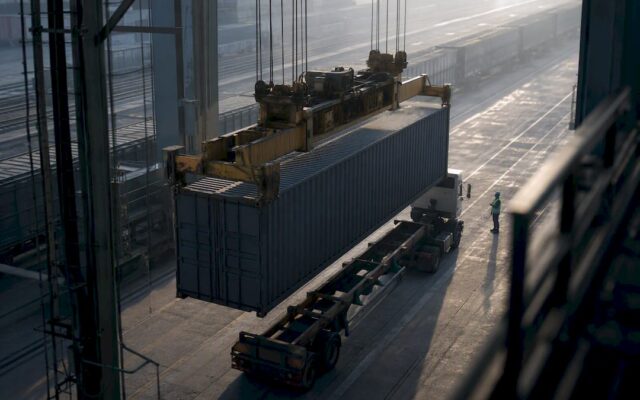
Cartonization reduces parcel and packing costs by matching each order to the smallest viable box, but only when it runs on measured SKU cube data and talks to your rate-shopping engine in real time. Skip either precondition and you get a smarter-looking system that still ships oversized boxes. The pilots that work start with clean dimensions, not new software.
TL;DR:
- Accurate item measurement and a lean carton library are essential to achieve significant cartonization savings, especially on high-volume or DIM-exposed SKUs.
- Real-time communication between the cartonization engine and rate shopping is critical to prevent overpaying due to mismatched box assumptions and outdated carrier rules.
- Implementing a pilot with 50 to 150 SKUs over six to ten weeks, including data cleanup and integration testing, helps identify failures before full deployment.
- Regular reconciliation of predicted versus actual carrier costs and KPIs like DIM waste and box utilization ensures the system continues to deliver savings.
- Successful rollout requires clear ownership, disciplined data management, and inclusion of irregular SKUs to surface process flaws early.
Table of Contents
- What Is Cartonization and What Problem Does It Solve?
- How Does Cartonization Software Actually Work?
- What Do You Need in Place Before Cartonization Works?
- Why Cartonization Must Be Coupled With Rate Shopping
- What Savings Should You Actually Expect?
- How Do You Roll Out Cartonization Without Breaking Operations?
- What Mistakes Erase the Expected Savings?
- How Do You Know If Cartonization Is Actually Working?
- How Do You Evaluate Cartonization Vendors and Platforms?
- What Field Deployments Actually Teach You
- The Real Priority Question: When Does Cartonization Earn Its Spot on the Roadmap?
- How 3PL Cowboy Helps You Get Cartonization Right the First Time
- Sources
What Is Cartonization and What Problem Does It Solve?
Cartonization is the process, usually run by software inside or alongside a warehouse management system, that decides which box (or combination of boxes) best fits an order before it hits the pack station. The engine outputs three things: the selected carton ID, a placement plan showing how items should sit inside it, and, when one box won’t work, a split plan across multiple cartons. That’s the whole job. Everything else is detail.
Three approaches dominate the market. Manual packing relies on a picker’s judgment, which is fast to deploy and consistently wrong at scale. Rules-based cartonization applies simple logic (“orders under 3 items go in Box A”) and improves consistency but breaks down on irregular SKUs. Algorithmic cartonization, typically 3D bin-packing or volumetric calculation, evaluates actual item geometry against a carton library and picks the best fit computationally.
The gap between these approaches shows up as dimensional weight (DIM) waste, and it’s bigger than most operations teams assume:
- A picker defaults to a familiar medium box for an order that would fit a small, cutting a $2 to $4 DIM penalty into every shipment.
- Fragile or irregular items get “safety margin” boxing, adding a size tier nobody actually needs.
- Multi-item orders get crammed into one oversized box instead of split into two boxes that clear a lower carrier rate tier.
- Seasonal SKU changes (new packaging, new bundle sizes) go unreflected in pack station habits for months.
Algorithmic cartonization closes that gap by replacing habit with calculation, and it can cut per-shipment costs by double-digit percentages depending on how bad current packing accuracy already is.
How Does Cartonization Software Actually Work?
The core computation is a variant of the bin-packing problem: given item dimensions, weight, and orientation constraints, find the smallest carton (or combination) that holds everything without exceeding weight or handling limits. True 3D bin-packing is computationally hard to solve perfectly, but software doesn’t need a perfect answer. It needs a fast, good-enough one, so cartonization engines use heuristics that converge on a near-optimal fit in milliseconds rather than searching every possible arrangement.
Three algorithm types show up in production systems:
- Rules-based logic. Fast to implement, transparent to audit, but rigid. Works fine for catalogs with low SKU variety and predictable order patterns.
- Volumetric calculation. Compares total item volume against carton volume without modeling actual geometry. Cheaper to build than full bin-packing, but it overstates fit for irregular shapes and understates it for items that nest well.
- 3D bin-packing with cost-aware logic. Models orientation, stacking, and fragility rules alongside carrier-specific cost variables, including DIM divisors, weight break points, and surcharge thresholds. This is the only type that can tell you a two-box split is cheaper than one large box, a real scenario once carrier DIM rules are factored into the decision.
Cartonization implemented as a WMS feature typically lifts packing accuracy from a manual baseline of roughly 50% to 65% up to 90% to 97% once the algorithm runs consistently against a maintained item master. That range matters more than any single vendor’s marketing number, because it tells you the ceiling depends on your own data quality, not the software’s cleverness.
In production, the output is usually an API payload: box ID, placement coordinates or a simplified packing sequence, weight, and a cost estimate, all pushed to the pack station screen or label printer before the order arrives at the bench.

What Do You Need in Place Before Cartonization Works?
The single biggest reason cartonization pilots underperform has nothing to do with the algorithm. It’s the item master. Every engine needs accurate length, width, height, and weight for every SKU, and “accurate” means measured, not estimated from a spec sheet or copied from a vendor catalog.
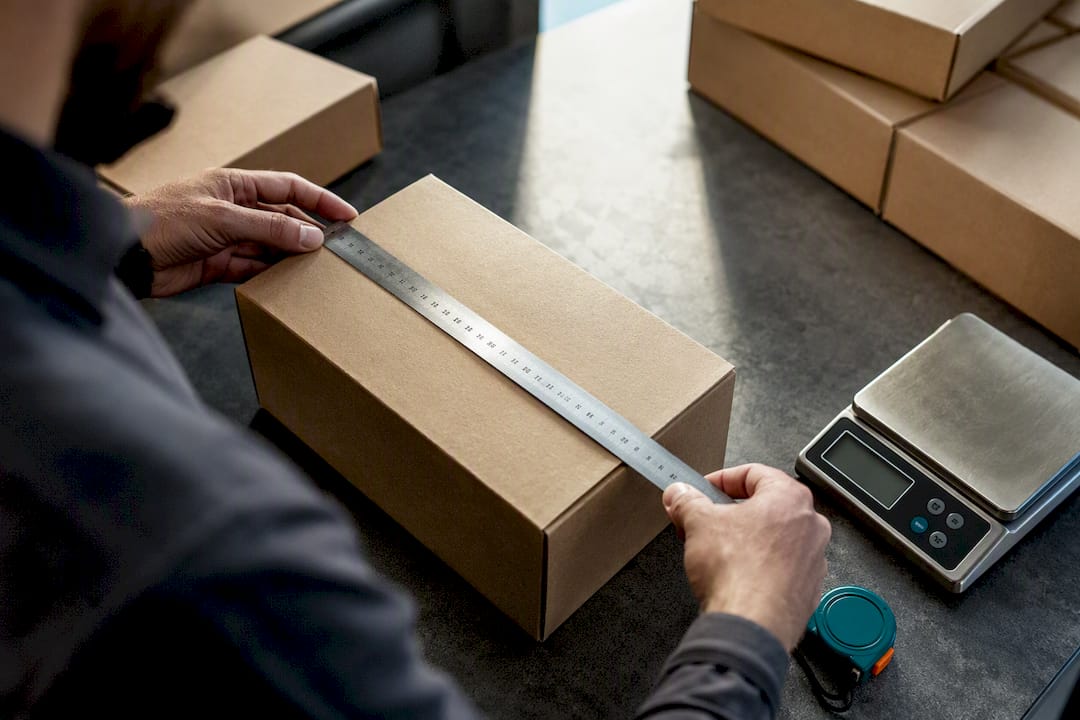
Bad data produces predictable failures: a mismeasured dimension by even half an inch on a tightly-fit SKU forces the algorithm to select the next carton size up, quietly reintroducing the DIM waste you built the system to eliminate. Weight errors trigger incorrect carrier surcharge assumptions. Orientation gaps, like items that must ship a specific side up, cause damage claims that get blamed on the software instead of the missing rule.
Carton library governance matters just as much as item data:
- Keep the active carton library lean; most operations run fine on fewer than 20 box sizes.
- Set a review cadence, quarterly at minimum, to retire underused sizes and catch drift from new packaging.
- Reconcile the physical carton inventory against the system’s library so pickers aren’t offered a box that isn’t on the shelf.
- Assign one owner for item master accuracy and one for carton library maintenance. Split ownership is how both go stale.
Dimensioning hardware, static scanners or handheld dimensioners at receiving, is worth the investment once parcel volume clears a few hundred shipments a day. Manual tape-measure sampling can work below that threshold if it’s disciplined and audited monthly.
Pro Tip: *Run a monthly sample audit of 50 random SKUs against system dimensions.
Why Cartonization Must Be Coupled With Rate Shopping
Cartonization and rate shopping solve different halves of the same equation, and running them separately produces confidently wrong answers. The cartonization engine picks a box; the rate-shopping engine picks a carrier and service level based on that box’s dimensions and weight. If those two systems don’t share data in real time, one of them is working off stale numbers.
Disconnecting the two is a well-documented failure mode: rate shopping runs on an assumed or default box size instead of the actual selected carton, overstates the DIM weight, and quietly overpays on every shipment that used a smaller-than-assumed box. Nobody notices because the invoice still looks roughly right, just consistently high.
The carrier rules worth modeling explicitly:
- DIM divisors, which vary by carrier and service level and directly convert box volume into billable weight.
- Oversize and additional-handling triggers, which can add a flat surcharge that dwarfs the base rate.
- Weight break points, where crossing a threshold by an ounce jumps you into the next pricing tier.
- Zone-based rate differences that make a two-box split cheaper on one carrier and more expensive on another.
Two architecture patterns handle this in practice. Tightly coupled systems have the cartonization engine query rate shopping in the same transaction, testing box options against live rates before committing. Iterative systems compute a default box, then let rate shopping flag when an alternate size or split would be cheaper, feeding that back before label generation. Coupled architecture is harder to build but produces better real-dollar outcomes; iterative is easier to bolt onto an existing WMS and still closes most of the gap.
Either way, build reconciliation into the loop: compare carrier invoices against predicted costs weekly, and set an automated alert when actual DIM-billed weight diverges from the cartonization engine’s prediction by more than a small tolerance. That alert is usually the first sign your carton library or item master has drifted.
What Savings Should You Actually Expect?
Savings vary by SKU mix, current packing accuracy, and volume, but the pattern is consistent: the worse your current over-boxing habit, the bigger the win. Algorithmic cartonization can cut per-shipment cost by double-digit percentages where manual packing accuracy was already poor. Operations that were already disciplined about box selection see smaller, though still real, gains.
Savings show up in more places than the parcel invoice line:
- Carrier cost reduction from lower DIM weight and fewer additional-handling surcharges.
- Material savings from less corrugated used per shipment and less void-fill purchased.
- Labor time recovered at the pack station once pickers aren’t guessing between three similar box sizes.
- Fewer damage-related returns, since correctly-sized boxes reduce product shift in transit.
The sustainability angle is real and increasingly relevant to enterprise customers auditing vendor packaging waste: less corrugated and less void fill per order is a straightforward emissions and material reduction, not a marketing claim. Packaging optimization that aligns design, sourcing, and operations tends to produce savings that compound instead of a one-time box swap.
Payback speed depends heavily on which SKUs you prioritize. High-volume SKUs shipped hundreds or thousands of times a month amplify even a small per-shipment saving fast. DIM-exposed SKUs, ones sitting just over a carrier’s weight or size break point, produce outsized wins because a half-inch correction can drop them into a cheaper rate tier entirely. Start there, not with your long tail of low-volume products, and read more on right-sizing tactics that compound with cartonization gains.
How Do You Roll Out Cartonization Without Breaking Operations?
Run this as a pilot, not a full-network rollout, and design it to fail fast on the parts that actually break.
- Select a bounded SKU set. Pick 50 to 150 SKUs covering your highest-volume items and a handful of known DIM-exposed products. Include a control group of comparable SKUs that stay on the current process.
- Clean and measure the pilot item master first. Every SKU in scope gets a physical dimension and weight check before go-live, no exceptions.
- Build a minimal carton library for the pilot. Five to eight box sizes are usually enough to prove the concept without the overhead of a full rationalization project.
- Wire the integration for read access first. Connect cartonization output to rate shopping in read-only mode initially, so you can compare predicted versus actual cost before it controls real label generation.
- Validate on the pack floor. Walk the pilot SKUs through physical packing for a full shift before trusting the system unattended; watch for orientation problems the algorithm didn’t anticipate.
- Reconcile against carrier invoices weekly for the first month, then move to a standing monitoring cadence once variance stabilizes.
A realistic timeline runs six to ten weeks: two weeks for data cleanup and carton library setup, two to three weeks for integration and testing, two to three weeks of monitored live operation, then a decision point on scaling. Assign a named data owner, an integration lead from IT or the WMS vendor side, and an operations lead who owns pack-floor validation. Vendor evaluation and WMS RFP management should happen in parallel if you’re sourcing a new platform rather than enabling an existing one.
Pro Tip: Don’t pilot on your easiest SKUs. Include at least a few irregular or fragile items in scope. That’s where rules gaps show up, and finding them in a 100-SKU pilot beats finding them after a full rollout.
What Mistakes Erase the Expected Savings?
Most cartonization failures aren’t algorithm failures. They’re process failures wearing an algorithm’s name.
- Disconnecting cartonization from rate shopping. This is the single most common and most expensive mistake. If rate shopping isn’t reading the actual selected carton in real time, you’re paying based on a guess. Catch it by comparing predicted DIM weight from the cartonization engine against DIM weight billed on the actual carrier invoice.
- Carrying too many carton SKUs. Every additional box size adds slotting complexity, picker confusion, and inventory carrying cost. Beyond a lean set, marginal fit improvement rarely justifies the operational overhead.
- Letting measurement drift go unchecked. New product packaging, vendor changes, and seasonal SKUs all introduce dimension errors that accumulate silently until over-boxing creeps back to pre-implementation levels.
- Ignoring carrier surcharge rules that change. Additional-handling triggers and DIM divisor updates happen without much fanfare from carriers. A cartonization engine running on outdated carrier rule mappings will make confidently wrong box choices.
- Treating the pilot as permanent. Rules validated on 100 SKUs don’t automatically generalize to 10,000. Scale in phases, not one leap.
How Do You Know If Cartonization Is Actually Working?
Track a small set of KPIs consistently rather than a large dashboard nobody checks. Four metrics carry most of the signal:
| KPI | Formula | Data source |
|---|---|---|
| Parcel cost per shipment | Total carrier spend ÷ shipment count | Carrier invoices |
| DIM waste percentage | (Billed DIM weight − actual item weight) ÷ billed DIM weight | Cartonization output vs. carrier invoice |
| Box utilization rate | Item volume ÷ selected carton volume | Cartonization engine logs |
| Repack rate | Repacked orders ÷ total orders | WMS pack station logs |
Pull cartonization outputs and WMS pack logs weekly; pull carrier invoice data on your billing cycle and reconcile against predicted cost the same week it lands. A gap between predicted and actual cost that exceeds a small tolerance for two consecutive cycles should trigger a data audit, not a shrug.
Run the rollout as a genuine A/B comparison where possible: pilot SKUs on the new system, a matched control group on the old process, same time window. That’s the only way to isolate cartonization’s actual effect from seasonal volume swings or unrelated carrier rate changes. A minimal pilot dashboard needs just four tiles: cost per shipment (pilot vs. control), DIM waste percentage trend, box utilization rate, and repack rate. Anything more elaborate before you’ve proven the basics is wasted dashboard-building time.
How Do You Evaluate Cartonization Vendors and Platforms?
Vendor evaluation goes faster with a checklist built around what the software must do, not what the sales deck claims it does.
Must-have technical capabilities:
- Cost-aware logic that models DIM divisors, weight breaks, and surcharge thresholds, not just volumetric fit.
- Full API output including box ID, placement or packing sequence, and a cost estimate per option evaluated.
- Configurable orientation and fragility rules per SKU or SKU category.
Integration and operational fit:
- Confirmed compatibility with your WMS, or a documented middleware path if not native.
- A sandbox environment for testing against your actual item master before commitment.
- A defined SLA for bug fixes and rule updates, especially for carrier rule changes.
- Support for a carton library sized to your actual SKU volume, not a generic template.
- A support model that matches your team’s technical depth, not just documentation links.
Before signing anything, demand pilot evidence: sample accuracy metrics from a comparable implementation, at least one reference check with a company running similar SKU volume, and a live integration trial against your own data rather than a demo dataset. A vendor unwilling to run a trial against your real item master, warts and all, is telling you something about how their system performs on messy data. If you’re running this evaluation alongside a broader 3PL or WMS decision, warehouse RFP management discipline applies here just as much as it does to a facility selection.
What Field Deployments Actually Teach You
Cartonization projects that succeed share a pattern: lean carton libraries, disciplined data ownership, and a pilot scoped tight enough to surface problems before they scale. Keeping the active library under roughly 20 common sizes isn’t a theoretical best practice; it’s what keeps slotting and picker training manageable once volume climbs.
The recurring win in field engagements is almost always the same story: a client assumed their item master was clean because nobody had complained, and a 50-SKU audit found dimension errors on a third of them. The recurring failure is just as consistent: cartonization gets implemented, rate shopping doesn’t get updated to read the new box logic, and the invoice savings never materialize even though the pack station looks smarter.
Scope pilots deliberately to surface integration edges fast. Include at least one SKU category with awkward geometry and one with strict orientation rules. Ownership belongs jointly between operations, which owns pack-floor execution and exception handling, and IT or the WMS administrator, who owns the item master and integration health. Split that ownership across three departments with no single accountable owner, and the carton library drifts within two quarters.
The Real Priority Question: When Does Cartonization Earn Its Spot on the Roadmap?
Cartonization earns priority when two conditions are both true: you have meaningful DIM exposure in your SKU mix, and your item master is fixable within weeks, not months. If your item master is a mess across thousands of SKUs, fix data hygiene first as its own initiative. Bolting an algorithm onto garbage dimensions just produces a more confident-looking version of the same over-boxing problem.
Against other cost levers, like slotting and pick-path work or renegotiating carrier contracts, cartonization tends to have a faster payback for operations already shipping high parcel volume with visible over-boxing. It has a slower payback for low-volume or highly customized SKU catalogs where manual judgment was already reasonably good.
My ask to any operations leader reading this: don’t approve a cartonization pilot without a named data owner, a defined metrics set, and a control group. Run 50 to 150 SKUs, six to ten weeks, and reconcile against real invoices before scaling. That structure is what separates a pilot that proves something from one that just generates a nicer-looking dashboard.
— Michael
How 3PL Cowboy Helps You Get Cartonization Right the First Time
3plcowboy is the operator-led alternative to guessing your way through a cartonization rollout. Most teams either buy software on a sales demo and discover the data gaps six months later, or they never quantify what over-boxing is actually costing them in the first place.

An engagement typically starts with fulfillment cost benchmarking to quantify current DIM waste and over-boxing rates against your actual shipment data, not industry averages. From there, the work covers WMS rollout oversight to make sure cartonization and rate shopping are wired together correctly from day one, plus 3PL selection and diligence if a fulfillment partner’s cartonization capability is part of a broader sourcing decision. Engagements are generally focused on measurable outcomes, such as pilots, KPIs, and defined production plans. If you’re evaluating whether your current fulfillment setup is leaving money on the table, request a fulfillment cost benchmarking assessment and get a straight answer before you commit to new software.
Sources
- Cartonization: What It Is, How It Works, and What It Costs 3PLs to Skip It | Obol
- New cartonization technology reduces shipping costs | Logistics Viewpoints
- Packaging optimization strategies & supply chain efficiency | Meyers
- What Is Cartonization and How Does It Cut Shipping Costs? | NetSuite