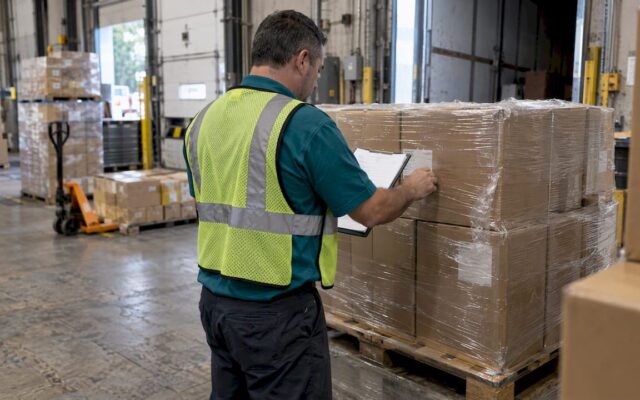
Packaging optimization is the systematic process of matching box size, material, and design to what’s actually inside, so you cut dimensional weight charges, material spend, and damage claims at the same time. Most operations are leaving money on the table right now: industry sampling suggests 28% to 50% of shipped parcels are not right-sized for their contents. Three moves fix most of that fast.
- Right-size first. Pull your 20 highest-volume SKUs and check actual box fill rate against void space today.
- Review materials second. Look for fiber substitutions or gauge reductions that don’t compromise protection.
- Instrument the program third. Track DIM charge per order and damage rate before you touch anything else.
Pro Tip: Pull carrier invoices for your top 50 SKUs before you approve any packaging change. Billed weight versus actual weight tells you where the real DIM penalty is hiding, and it’s almost never where the team assumes.
Teams that rightsize aggressively often see package volume drop meaningfully. Ranpak’s height-reduction automation has produced volume cuts of up to 25% in specific use cases, and a parametric redesign documented in a 2025 MDPI packaging study trimmed per-item material by roughly 8% in a bottle case study, a small number that scales into millions of dollars once you multiply it across a full catalog.
Key Takeaways
Packaging optimization succeeds when teams rationalize pack families, validate changes through structured pilot testing, and track DIM charge, material spend, and damage rate as a single connected KPI set.
| Point | Details |
|---|---|
| Right-size before automating | Standardize pack families to 5 to 8 sizes before evaluating any automated cartonization system. |
| Prioritize total landed cost | Weigh material, DIM charge, and damage rate together, not material cost alone. |
| Test before scaling | Run drop, compression, and vibration tests, then a 200 to 500 order pilot before full rollout. |
| Set thresholds up front | Define acceptable damage-rate change before the pilot starts to avoid noisy, inconclusive results. |
| Get expert benchmarking when capital is at risk | 3plcowboy’s advisory work helps teams benchmark packaging and 3PL decisions before committing budget. |
Table of Contents
- What Are the Highest-Impact Packaging Optimization Strategies?
- Manual Rules vs. Algorithmic Cartonization: Which Rightsizing Approach Fits?
- Do Sustainable Materials Actually Lower Total Packaging Cost?
- How Do You Test a Smaller Package Without Increasing Damage Risk?
- What KPIs Prove Packaging Optimization Is Working?
- What Operational Track Record Backs These Recommendations?
- How Does Packaging Change Ripple Through the Rest of the Supply Chain?
- What Regulatory and Labeling Rules Apply to Optimized Packaging?
- How Should End-of-Life Packaging Be Managed?
- What Do Real Packaging Optimization Rollouts Look Like?
- How Does Packaging Fit Into Broader Inventory and Logistics Planning?
- Sources
What Are the Highest-Impact Packaging Optimization Strategies?
Rank the work by dollars recovered per hour invested, not by what feels most urgent on the warehouse floor.
- Right-size packaging and rationalize pack families. Cut your SKU-level box options down to a small, standardized family (typically 5 to 8 sizes covers 80% of a mid-size catalog) instead of ordering custom cartons for every product variant. A tight pack family reduces purchasing complexity and gives packers fewer wrong choices to make under time pressure.
- Profile SKUs and build hard packing rules. Group products by dimensional footprint and fragility, then assign each group a default box and cushioning method. This stops the common failure mode where a packer defaults to the biggest available box because it’s the fastest decision, not the correct one.
- Consolidate and bundle multi-item orders. Orders with two or more small items shipped separately are the single easiest DIM-charge win in most operations. Set a hard rule: any order under a defined weight and cube threshold ships in one container unless a fragility flag overrides it.
- Build process controls into the WMS or OMS. Add a box-size prompt at the pack station tied to order data, not packer memory. A quality gate that flags outlier box selections before the label prints catches expensive mistakes before they ship, not after a customer complains.
The order matters. Rationalizing pack families before you invest in automation means the automation has fewer variables to solve, and that’s the difference between a rightsizing project that pays back in months and one that never clears its own implementation cost.
Manual Rules vs. Algorithmic Cartonization: Which Rightsizing Approach Fits?
Manual box-selection rules work fine for a stable catalog with a handful of pack families and predictable order profiles. A packer follows a laminated chart, picks the assigned box, done. The moment your SKU count or order variability grows, manual rules break down because no chart can hold enough logic to handle real-world edge cases.
Algorithmic cartonization, the kind of box-selection software ShipBob and similar fulfillment operators run through Cubiscan measurement systems, solves that by calculating the optimal container for every order in real time based on item dimensions, fragility flags, and bundle rules. Amazon’s machine-learning packaging system takes it further by shifting eligible items from corrugated boxes to lighter flexible mailers automatically, which has meaningfully reduced its corrugated volume for suitable product categories.
Physical rightsizing machines, height reducers and cut-to-size equipment, sit at the automation end of the spectrum:
- They cut a standard box down to the exact height an order needs, which eliminates void fill entirely for many shipments.
- Throughput on these systems generally scales well above manual packing rates, which matters once order volume justifies the capital cost.
- They need clean data to work: accurate SKU dimensions, historical damage rates by product category, and defined bundle rules, or the algorithm optimizes against bad inputs.
The most common pitfall is overfitting the model to your top 20 SKUs while your long-tail catalog still ships in oversized defaults. Ranpak’s own use-case data shows automation delivers the strongest return when order profiles are stable and volume is high. If your catalog is long-tail and irregular, well-designed pack families with solid training often outperform a half-tuned automated system in year one.
Do Sustainable Materials Actually Lower Total Packaging Cost?
Often, yes, but only when you price the full landed cost, not just the material line item. A lighter or fiber-based package that reduces DIM weight and damage claims can beat a cheaper-per-unit plastic alternative once you add shipping and returns into the comparison.
Fiber substitution makes sense when recycling infrastructure in your target market actually supports it and when the fiber option doesn’t require oversizing to match the plastic version’s protective performance. The MDPI packaging study modeled an 8% per-item material reduction from redesign alone, and extrapolated that gain to annual material savings in the millions of tons and multi-billion dollar economic impact when applied at industry scale using 2022 PET pricing, evidence that small per-item design wins compound fast across a large shipping volume.
Design-for-recyclability comes down to a few hard rules:
- Avoid laminating plastic film to paperboard; mixed substrates usually can’t be sorted by standard recycling streams.
- Skip mixed-material tape and labels where a mono-material alternative exists.
- Test fiber alternatives against your actual damage history before rolling them out, not against a vendor’s marketing claim.
Academic frameworks like the 7 R’s model, rethink, refuse, reuse, reduce, recycle, repurpose, rot, give procurement teams a shared vocabulary for evaluating trade-offs beyond “is it recyclable.”
How Do You Test a Smaller Package Without Increasing Damage Risk?
Run the change through a structured sequence before it touches full production volume.
- Build the prototype based on your rationalized pack family and updated material spec.
- Run lab testing: drop tests from carrier-relevant heights, compression testing to simulate stacking in transit, vibration testing for over-the-road conditions, and climate testing if the product is temperature-sensitive.
- Ship a controlled pilot batch, typically 200 to 500 orders is enough to surface a real signal without exposing your whole customer base to an unproven design.
- Compare the damage-rate delta against your existing baseline over the same shipping lanes and carrier mix, not against a different time period or region.
- Set a pass/fail threshold before you start, for example, no more than a 0.5 percentage point increase in damage rate is acceptable to greenlight full rollout.
Shopify’s ecommerce packaging guidance recommends this same define, research, prototype, test sequence, and the step teams skip most often is defining the pass/fail threshold up front. Without it, a noisy pilot result turns into an endless argument about whether the new packaging is actually working.
What KPIs Prove Packaging Optimization Is Working?
Assign one owner, usually a packaging engineer or ops manager, who reports jointly to supply chain and finance so cost savings get validated against real invoices, not internal estimates.
Track five numbers weekly:
- Average package volume per order
- DIM charge per order
- Material spend per order
- Units packed per hour (throughput)
- Damage or return rate tied to packaging failure
Run pilots for 6 to 12 weeks, long enough to average out weekly order-mix noise. Underpowered pilots are the most common failure point in packaging programs: a two-week test on 50 orders will produce a damage-rate number that swings wildly for reasons that have nothing to do with the new box. Revisit your pack-family assignments quarterly, since SKU mix and supplier packaging both drift over time.
Pro Tip: Tie the pilot’s damage-rate threshold to your carrier’s own claims data, not an internal guess. Carriers already track this by lane, and their numbers are what finance will trust when you ask for rollout budget.
What Operational Track Record Backs These Recommendations?
Michael Nooner has spent 17-plus years in operational leadership across Nike, Walmart, DHL, FedEx, Kellogg’s, and Peloton, work that sits inside the same cost and accuracy pressures packaging optimization is meant to relieve.
Taking a Nike inventory operation from 61% to 98%-plus cycle count accuracy across more than 450,000 SKUs required exactly the kind of process discipline packaging rightsizing depends on: clean data, hard rules, and a governance owner who actually checks the numbers. A pallet-program redesign at Kroger delivered more than $6 million in annual savings, and an 8-month WMS rollout across more than 60 Sysco sites proved that operational change at scale only sticks when it’s measured weekly, not annually.
Bring in outside advisory when the decision carries real capital risk, a new automation purchase, a 3PL renegotiation, or a network-wide packaging standard, and your internal team lacks the bandwidth to benchmark it properly before committing.
How Does Packaging Change Ripple Through the Rest of the Supply Chain?
A smaller, lighter package doesn’t just save on shipping. It changes pallet configuration, truckload cube utilization, and warehouse slotting all at once, which is why packaging decisions belong in network design conversations, not just procurement.
Cutting package volume increases how many units fit per pallet and per trailer, which lowers your outbound freight cost per unit independent of any DIM-charge savings on individual parcels. It also changes your warehouse space requirements: smaller footprint packaging means denser storage, which can defer or eliminate a facility expansion that would otherwise show up in next year’s capital budget. Teams doing warehouse size planning for a new lease or renewal should run packaging changes through the model before signing, not after, because the answer to “how much warehouse space do I need” shifts materially once pack sizes shrink.
Damage rate reduction from better-fitted packaging also reduces reverse logistics volume, fewer returns processed, fewer replacement units picked and repacked, which frees warehouse labor for outbound throughput instead of exception handling. None of this shows up on a packaging line item, but it shows up in your quarterly freight and labor spend, which is exactly why packaging decisions deserve a seat in broader distribution network design conversations rather than living solely inside procurement.
What Regulatory and Labeling Rules Apply to Optimized Packaging?
Rightsizing and material changes don’t exempt a package from labeling and compliance obligations, and cutting corners here creates liability that erases any cost savings you just captured.
Any material substitution needs to clear the same regulatory bar the original packaging did: food-contact packaging must still meet FDA or applicable food-safety standards, and packaging for regulated goods, pharmaceuticals, certain electronics, hazardous materials, carries its own labeling mandates that don’t change just because the box got smaller. If you’re shipping into multiple states or countries, recycling and disposal labeling requirements vary by jurisdiction, and several U.S. states now require specific recyclability claims to meet defined substantiation standards before you print them on a box.
Weight and dimension changes also affect hazmat classification thresholds and carrier documentation in some categories, so a packaging engineer changing box size on a regulated product should loop in compliance before finalizing the pilot, not after it ships. Building a compliance checkpoint into your packaging design workflow, the same testing sequence covered earlier, catches these issues at the prototype stage where a fix costs almost nothing, instead of after a full production run has already gone out the door.
How Should End-of-Life Packaging Be Managed?
Design-for-recyclability decisions made at the material-selection stage determine what happens to a package months later, and most of the cost of a poor end-of-life outcome never shows up on the packaging budget at all.
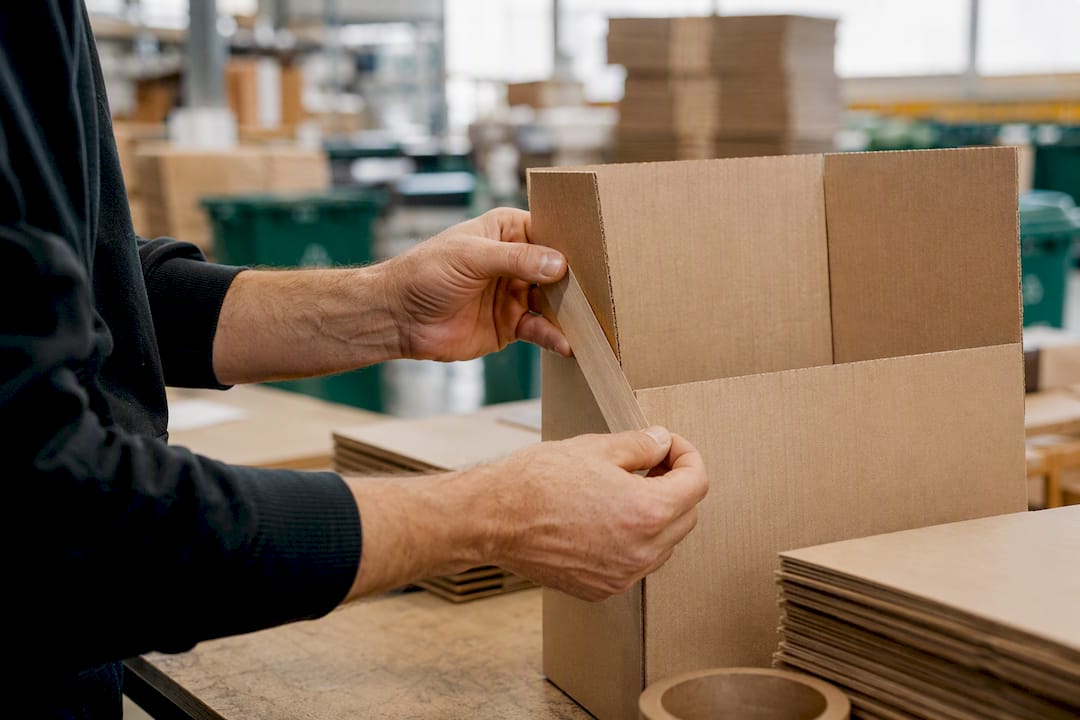
Mono-material design is the single biggest lever here: a corrugated box with a plastic-film liner or mixed-substrate tape usually can’t be processed by standard municipal recycling streams, which pushes it to landfill regardless of what the box printed on the side claims. The 7 R’s framework, rethink, refuse, reuse, reduce, recycle, repurpose, rot, gives packaging teams a practical sequence: rethink the need for the packaging first, refuse unnecessary components second, and treat recycling as a later-stage fallback rather than the primary sustainability strategy.
Reusable packaging programs, returnable totes or shippers for B2B and subscription models, shift the economics further by removing single-use material cost entirely for repeat customers, though they require reverse logistics infrastructure most direct-to-consumer operations don’t yet have. Circular-economy pilots, take-back programs, or packaging-as-a-service models are still niche outside specific verticals like apparel and electronics, but they’re worth modeling if your customer base already skews toward repeat purchasing, since the packaging cost curve looks very different on the tenth shipment than the first.
What Do Real Packaging Optimization Rollouts Look Like?
The pattern across successful implementations is consistent regardless of industry: rationalize pack families first, validate through structured testing second, then automate only where volume justifies the capital.

Ecommerce operations running high SKU counts have used cartonization software paired with Cubiscan measurement to cut oversized shipments from roughly half of parcels down to a small fraction, capturing both DIM-charge savings and material cost reduction in the same pass, an approach ShipBob documents in its own fulfillment operations. Consumer goods companies with high-volume, low-variability catalogs have leaned harder into physical rightsizing automation, height-reduction equipment that eliminates void fill entirely, because Ranpak’s use-case data shows that equipment pays back fastest when order profiles stay predictable.
Large-scale operations with enough data density have gone further still: Amazon’s machine-learning cartonization system shifts eligible items from rigid corrugated boxes to lighter flexible mailers automatically, cutting corrugated volume substantially for suitable product categories. That approach isn’t accessible to most mid-size shippers yet, but the underlying principle scales down fine: know your SKU-level fragility and dimension data well enough to make the box-versus-mailer decision automatically instead of by habit.
How Does Packaging Fit Into Broader Inventory and Logistics Planning?
Packaging decisions and inventory strategy are more connected than most organizational charts suggest, and treating them as separate workstreams is how companies end up solving the same problem twice.
Pack-family rationalization changes your inbound receiving process too: fewer box SKUs to stock means simpler replenishment triggers for packaging materials themselves, which is inventory management applied to your own supply inputs, not just the products you sell. Warehouse slotting decisions should account for updated package dimensions once a rightsizing project completes, because a slotting plan built around old box sizes leaves cube utilization on the table even after the packaging itself has improved.
Distribution network design conversations, especially where a company operates through third-party logistics partners, should include packaging specs as a fixed input, not an afterthought negotiated after the network is already contracted. A 3PL quoting storage and fulfillment fees based on outdated dimensional assumptions will price your account incorrectly in either direction, and getting that input wrong at the RFP stage is expensive to unwind later.
What’s the One Thing Teams Get Wrong First?
Companies love to fix packaging aesthetics before proving the box even fits right. Skip that. Rationalize pack families and pilot-test rightsizing first, cosmetics later, if at all.
Pull 200 recent orders this week and flag the three SKUs with the worst box-to-item fit. That’s your starting list.
— Michael
Get Expert Help Accelerating Your Packaging Optimization
Most packaging teams don’t lack ideas, they lack the bandwidth to benchmark options against real carrier and material data before committing capital. That’s the gap 3plcowboy’s advisory work closes: an operator-led engagement, not a sales-driven vendor recommendation, built around benchmarking your current cost structure, overseeing pilot design so damage-rate results actually mean something, and managing RFPs if a packaging change also triggers a 3PL renegotiation.

Engagements typically focus on getting a rightsizing or material-change pilot from concept to validated rollout faster than an internal team can manage alone, while catching the data gaps, thin SKU dimension records, unclear bundle rules, that quietly sink most pilots before they start. If your packaging project touches warehouse space, freight cost, or a 3PL contract, talk to 3plcowboy about a benchmarking engagement before you commit capital to the wrong fix.
Sources
- Sustainable Packaging Design: Packaging Optimization and Material Reduction for Environmental Protection and Economic Benefits to Industry and Society
- Right-Sized Packaging Solutions | Optimize Box Size & Reduce Waste | Ranpak
- Right-Sized Packaging the Right Way: Guide, Benefits, & Tips
- Product Packaging Design: Guide for Ecommerce (2026) – Shopify
- Behind Amazon’s Packaging Strategy: Machine Learning-Powered Optimization