Operational excellence with a 3PL comes down to six things working together: disciplined process design, technology that enforces rather than replaces good process, a real continuous improvement culture, KPIs everyone actually looks at, risk and capacity guardrails, and partnership governance that keeps both sides honest. Miss any one pillar and the others cap out early. Lean Six Sigma gives you the process backbone; the rest is execution discipline. 3plcowboy has watched this play out across brands running 450,000+ SKU networks, and the pattern repeats: teams that sequence the work in the right order win faster and keep the gains.
Your next 30 days should include:
- Baseline your top five KPIs (pick accuracy, dock-to-stock, lines per labor hour, SLA compliance, claims recovery) before touching anything.
- Capture written SOPs for your three largest clients, since undocumented tribal knowledge is the number one cause of onboarding exceptions.
- Run one slotting quick-win on your highest-velocity SKUs and measure the labor-hour delta within two weeks.
Key Takeaways
3PL operational excellence requires disciplined process work first, SOP-driven automation second, and a measured Kaizen culture that sustains both under real client volume.
| Point | Details |
|---|---|
| Fix process before automating | Undocumented workflows just get automated faster, not fixed, when technology comes first. |
| Baseline KPIs before changing anything | Track pick accuracy, dock-to-stock, and SLA compliance weekly before any intervention. |
| Prioritize slotting and receiving fixes | These typically score highest on impact versus effort on a project scorecard. |
| Roll out changes progressively | Pilot on one dock or client account before scaling facility-wide to protect service levels. |
| Bring in operator-led advisory | 3plcowboy applies hands-on operating experience to sequence 3PL selection, automation, and WMS rollouts correctly. |
Table of Contents
- What Are the Core Pillars of 3PL Operational Excellence?
- How Do You Optimize 3PL Processes for Measurable Impact?
- Which Technology Investments Actually Move the Needle?
- How Do You Build a Kaizen Culture That Sticks?
- What KPIs Should You Track, and How Do You Score Improvement Projects?
- How Do You Protect Service Levels While Making Changes?
- What Should Be in Your 3PL Partnership Governance Model?
- What Do Real 3PL Case Results Look Like?
- Where Most 3PL Improvement Plans Go Wrong
- How 3plcowboy Turns This Playbook Into Execution
- Sources
What Are the Core Pillars of 3PL Operational Excellence?
Six pillars determine whether a 3PL operation runs lean or leaks money every shift.
- Process discipline sets the baseline. Without standardized receiving, putaway, and picking, automation just scales the mess faster.
- Technology and automation enforce the process at volume, particularly across mixed-client environments where every account has its own rules.
- Continuous improvement culture turns frontline observations into permanent fixes instead of one-off saves.
- KPIs and scorecards give you the evidence to know whether a change actually worked, and they’re what makes Kaizen sustainable instead of anecdotal.
- Risk and capacity planning protects service levels while you’re mid-change.
- Partnership governance keeps client and operator incentives aligned so improvements survive contract renewals.
The pillars aren’t sequential exactly, but they’re not equal either. Fix broken process before you automate it. A warehouse management system layered on top of undocumented workflows just automates chaos at scale.
How Do You Optimize 3PL Processes for Measurable Impact?
Process optimization in a 3PL setting starts with mapping the receiving-to-putaway flow, because that’s where errors compound downstream into pick faults and shipping exceptions. A structured DMAIC approach (Define, Measure, Analyze, Improve, Control) works well here because it forces you to measure before changing anything.
- Define the process boundary: receiving dock to first putaway scan.
- Measure current cycle time, error rate, and labor hours per receipt.
- Analyze where delays or errors cluster, usually at data entry or ASN mismatches.
- Improve with targeted fixes: barcode-first receiving, two-person verification on high-value SKUs.
- Control with a checklist and periodic audit so the fix doesn’t erode in six months.
One case study using this exact framework took inbound process cycle efficiency from around 40% to 70% and cut lead time by more than 40%, which is the kind of number that justifies the time invested in mapping the process properly. High-ROI quick wins tend to cluster in the same places: slotting fast movers closer to pack stations, tightening receiving checklists, and running cycle counts on a fixed cadence rather than annually.
Pro Tip: Score every proposed project on four axes, cost impact, time-to-value, implementation effort, and operational risk, before you commit resources. Slotting fixes usually score high on impact and low on effort, which is why they belong first on the list.

Which Technology Investments Actually Move the Needle?
WMS hygiene comes before automation, always. That means clean master data, enforced scanning at every touchpoint, and integration endpoints that talk to client systems without manual re-keying. Skip this step and any automation layer inherits the same data errors, just faster.
Once the WMS foundation is solid, SOP-driven automation for claims and exception handling is where multi-tenant 3PLs see the clearest return. Single-shipper tools break down when you’re running 40 different client rulebooks through one facility; automation has to be built around each client’s SOP, not a generic workflow.
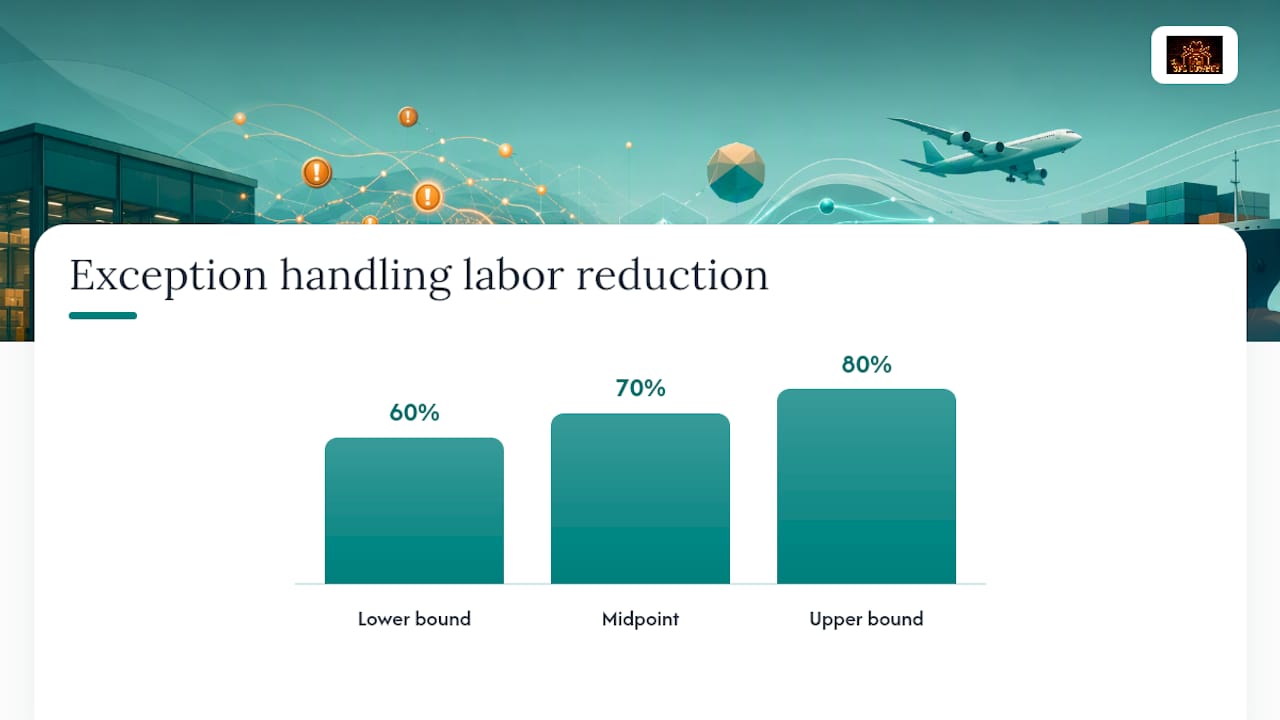
- SOP-driven automation on claims and exceptions can cut exception-handling labor by 60 to 80 percent when rolled out progressively.
- Progressive, human-in-the-loop deployment matters more than the automation tool itself: granting autonomy gradually as confidence builds avoids the operational risk of a bad automated decision going unnoticed.
- SLA automation and live dashboards reduce retroactive penalty disputes and tend to strengthen the renewal conversation with clients.
A 60 to 80 percent labor reduction on exception handling is not a small number for a department that often runs as pure overhead. That single automation category frequently pays for the rest of the technology stack.
How Do You Build a Kaizen Culture That Sticks?
Kaizen in a 3PL only works if it has structure, not just enthusiasm. That means a small continuous improvement team with clear ownership, daily huddles where frontline staff surface bottlenecks, and an open problems list (OPL) that gets reviewed weekly, not quarterly.
- Assign a CI lead per shift, not just per facility, since problems surface differently on nights versus days.
- Run experiments on a single dock door or one client account before rolling changes facility-wide.
- Codify every win into a versioned SOP the moment it’s confirmed, so the fix doesn’t live only in one supervisor’s head.
Programs combining Kaizen with digital tracking tools tend to produce 15 to 30 percent efficiency gains in the first year, with the higher end of that range showing up where automation or robotics reinforces the process change. Frontline empowerment matters more than most operators expect. The people running the dock spot bottlenecks weeks before a scorecard does.
Pro Tip: Never roll out a process change across all client accounts at once. Pilot it on your most cooperative client first, measure for two weeks, then scale.
What KPIs Should You Track, and How Do You Score Improvement Projects?
Five KPIs cover most of what matters in a 3PL operation: pick accuracy (correct picks divided by total picks), lines per labor hour, dock-to-stock time (receipt to available inventory), SLA compliance rate, and claims recovery rate.
- Calculate each KPI weekly, not monthly. Monthly averages hide the week where things actually broke.
- Score every improvement candidate on cost impact, time-to-value, effort, and risk, using a simple 1 to 5 scale on each axis.
- Rank projects by total score and tackle the top two per quarter, not everything at once.
- Report results to clients in the same format every quarter so trend lines are comparable, not reconstructed from scratch.
A framework combining Lean Six Sigma with structured continuous improvement produced a 10 percent reduction in order processing time and a 25 percent decrease in average delivery time in one study sample, alongside a 5 percent cost saving. Those are the kinds of numbers a scorecard should be built to surface early.
How Do You Protect Service Levels While Making Changes?
Every process change carries risk, and the fix is a basic probability-times-impact matrix before you touch a live account. Score each proposed change on how likely it is to disrupt service and how bad that disruption would be if it did.
- Roll out changes progressively: one dock, one client, one shift, before facility-wide adoption.
- Keep a temporary labor buffer available during any transition period, especially around slotting or WMS changes.
- Gate new client onboarding until the current change has stabilized, since onboarding stress compounds process risk.
- Build a peak-season runbook that freezes non-critical changes 60 days before your busiest period.
Timing matters as much as the change itself. A great process fix launched two weeks before peak volume is a bad decision regardless of how sound the underlying math is.
What Should Be in Your 3PL Partnership Governance Model?
Partnership governance is where a lot of operational excellence quietly falls apart, usually because onboarding skipped details that surface as exceptions three months later.
- Require full SOP capture at onboarding, including edge cases the client thinks are “obvious” but never wrote down.
- Build SLAs with clear, fair remediation tiers, not blanket penalty clauses that punish both sides for one bad week.
- Schedule quarterly business reviews (QBRs) with a joint continuous improvement plan attached, not just a performance report.
- Track renewal-relevant metrics separately from day-to-day KPIs, since clients renew on trend and communication as much as raw numbers.
Escalation paths should be defined before the first exception happens, not improvised during one.
What Do Real 3PL Case Results Look Like?
Numbers from actual operating engagements tell you more than a framework ever will. A Nike inventory operation moved from 61% to over 98% cycle count accuracy across 450,000+ SKUs, a pallet-program redesign delivered $6M+ in annual savings for Kroger, and an 8-month WMS rollout across 60+ Sysco sites showed that staged migrations and master-data cleanup matter more than the software choice itself.
The WMS rollout lesson that generalizes best: budget 60 to 90 days of stabilization after go-live before you trust the KPI dashboard. Steady-state numbers before that window are noise, not signal.
- Cycle-count accuracy gains of that scale took measurement discipline before any technology change.
- The pallet-program savings came from a process redesign, not new software.
- Multi-site WMS rollouts need a staged sequence, not a single cutover date.
Test one of these in your next 90 days: pick a single KPI, baseline it honestly, then fix the process before you buy anything.
Where Most 3PL Improvement Plans Go Wrong
The most common mistake is buying automation before the process is mature enough to automate. Sequence it: measure first, take the quick wins, then automate, then scale. Operator-led advisory changes that sequencing because it prices risk the way a practitioner does, not the way a software vendor selling licenses does.
How 3plcowboy Turns This Playbook Into Execution
Reading a playbook and executing one under live client volume are different problems, and that gap is exactly where a retained, operator-led advisory earns its keep. 3plcowboy isn’t a broker matching you to a 3PL off a referral list, and it isn’t a software vendor selling you a dashboard. It’s underwriting-grade diligence applied to the decisions in this article: which processes to fix first, which automation actually pays back, how to structure SLAs that survive a bad quarter, and when a WMS rollout is scoped realistically versus optimistically.

Whether you’re a brand vetting 3PL partners or a 3PL operator trying to close the gap between current state and the numbers above, the services map directly to that job: 3PL selection and diligence, operations advisory, WMS rollout support, and cost benchmarking against real market data. Start with an exploratory call through The 3PL Cowboy to scope where your operation actually sits against these pillars.
Sources
- Reducing Inbound Logistics Process Cycle Time Using Lean Six Sigma
- A Continuous Improvement Framework to Enhance Supply Chain Efficiency in Third-Party Logistics Companies
- 3PL operations automation: Reducing claims, exceptions, and manual work | CorePiper
- Kaizen in 2025 logistics: real-world warehouse improvements – Global Trade Magazine
- Smartstorage