Start with appointment based slot control paired with a basic yard housekeeping program. That single combination cuts truck wait times, stabilizes dock flow, and trims gate overtime faster than any other first move. We recommend running it as a focused 30 to 45 day pilot before expanding, because the data from it tells you whether to scale or adjust.
TL;DR:
- Phase appointment rules from voluntary to mandatory; ports that began with mandatory reservations faced carrier resistance, while gradual adoption kept carriers cooperative.
- Port of Virginia’s housekeeping proof of concept cut domestic import rehandles by 28.6%, but gains depend on accurate location records and disciplined staging.
- Set a two week baseline in one yard or gate lane, manually verify trailer locations, and expand only after midpoint and final reviews.
- Choose a system with live appointment updates, automatic trailer tracking, flexible dock assignment, and open connections to warehouse and transportation systems.
- Track turn time, gate waits, dwell, rehandles, dock use, and gate hours daily during the pilot, then review weekly once operations stabilize.
Table of Contents
- What Yard Management Actually Covers
- Prioritized Tactics to Cut Delays and Stabilize Flow
- Technology That Actually Moves the Needle
- Measure It: The KPIs That Tell You If It’s Working
- How to Pilot and Scale a Yard Management Strategy
- Lessons From the Operating Floor
- Why Yard Control Belongs on the Operations Agenda Now
- Where Retained Support Fits Into a Yard Pilot
- FAQ
- Sources
What Yard Management Actually Covers
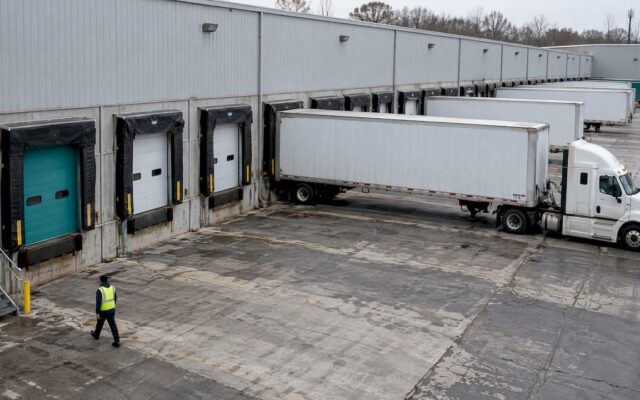
Yard management is the discipline of controlling everything between a truck’s arrival and its departure from the dock: the gate, the yard itself, and the handoff to the warehouse floor. A workable strategy treats that path as one continuous flow rather than three separate problems.
The core components you need in place are:
- An appointment engine that schedules inbound and outbound trailer arrivals against real dock and yard capacity
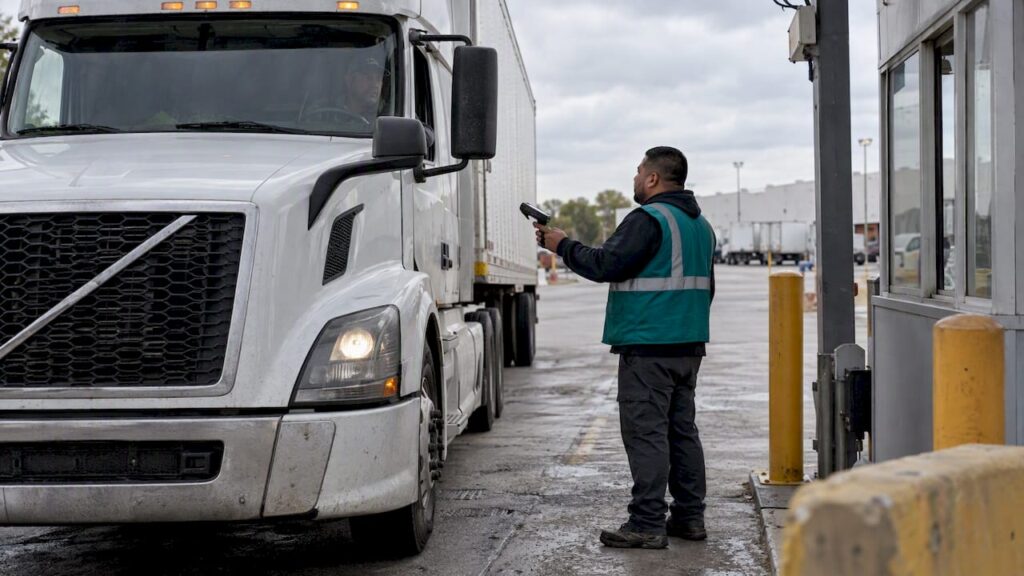
- Gate processes that check drivers in quickly, verify loads, and route them without manual radio calls
- Yard housekeeping rules that keep trailers staged in predictable, findable locations
- Trailer and asset tracking so dispatchers know where every unit sits at any moment
- Dock scheduling that matches open doors to arriving loads in real time
- Communication channels linking yard checkers, dock supervisors, and transportation planners
When these pieces work together, a driver pulls in, checks in against a reservation, gets directed to a staged spot or open door, and leaves without idling for hours. When they do not, the yard becomes the bottleneck for the entire building, regardless of how efficient the warehouse floor is.
Prioritized Tactics to Cut Delays and Stabilize Flow
Not every tactic deserves equal attention on day one. This is the order we recommend working through, based on how fast each one pays off and how much it depends on the others being in place first.
- Appointment policy first. Start voluntary, then move to mandatory once carriers see the benefit. Ports that pushed mandatory reservation systems from the outset met carrier resistance, but those that phased in voluntary adoption before tightening the policy reached predictable operations faster and kept carriers cooperative even outside mandatory hours, according to the Port of Virginia’s truck reservation project.
- Yard housekeeping second. Appointment systems only work if trailers are where the system expects them. Stack grooming, which means keeping containers and trailers organized so the next move doesn’t require digging out a buried unit, is what makes a reservation’s promised turn time real instead of theoretical.
- Gate-side UX third. Automated gate check-in, license plate capture, and pre-cleared paperwork shrink the minutes a driver spends idling at the booth. This is where small friction compounds: a 90 second check-in times 200 trucks a day adds up to hours of gate time nobody budgeted for.
- Dock sequencing fourth. Dynamic bay assignment, where the system reassigns an open door to whichever staged trailer is ready rather than holding a fixed slot, keeps doors from sitting empty while a late truck is still inbound.
- Labor alignment fifth. Crew shift patterns should flex against the appointment calendar, not a fixed schedule set weeks in advance. Real-time reassignment of dock labor to match actual arrival clusters prevents the all too common pattern of idle crews at 9 AM and overtime at 6 PM.
The housekeeping piece deserves a specific callout because it’s the one most operators underrate. An AI-assisted housekeeping proof of concept at the Port of Virginia cut re-handles for domestic imports by 28.6%, with modeling suggesting it could eliminate tens of thousands of unnecessary repositioning moves a year if scaled across stacks. That’s not a software win so much as a discipline win: fewer wasted moves because trailers were staged correctly the first time.
Integrated appointment systems paired with gate automation have driven truck turn-time improvements of up to about half in documented terminal cases, according to DOT-cited case material. Your yard will not necessarily hit that number, but it illustrates the ceiling when appointment control, housekeeping, and gate automation are all working together rather than in isolation.
Pro Tip: Run housekeeping and appointment scheduling as a paired pilot, not sequentially. A clean yard with no scheduling discipline just means trucks arrive on time to a yard that still can’t move them fast.
For dock sequencing specifically, the door count and layout you’re working with matters more than most strategy documents admit. If your facility’s door-to-trailer ratio is already tight, read our breakdown of cross-dock door count planning before you try to layer dynamic assignment on top of a layout that can’t support it.
Technology That Actually Moves the Needle
Yard management system shopping gets complicated fast because vendors pile on features that sound useful but don’t change outcomes. Here’s what actually matters when you’re evaluating or integrating a system.
Must-have YMS capabilities:
- An appointment engine with real-time booking and cancellation, not a static calendar
- Trailer and container tracking tied to physical yard location, updated automatically
- Bay and dock scheduling that can reassign on the fly as arrivals shift
- Open APIs that connect cleanly to your warehouse management system (WMS) and transportation management system (TMS)
Integration is where most rollouts stall. Your YMS needs a live data handshake with your WMS so dock labor planning reflects actual trailer arrivals, and with your TMS so carriers get accurate appointment windows instead of guesses. For ocean or rail-adjacent yards, a link to the terminal’s port management information system matters too: integrated systems that combine appointment data, gate automation, and cargo handling equipment management can meaningfully cut truck turn times and idle emissions, per EPA case documentation.
On the field hardware side, prioritize gate scanners and license plate recognition for check-in speed, telematics on trailers for location accuracy, and camera coverage at the gatehouse and critical yard chokepoints. A clear framework for planning that camera coverage, including zone maps and install checklists, is laid out in this warehouse security camera guide, which is useful reference material when you’re scoping gate-side visibility rather than buying hardware piecemeal.
AI-based housekeeping tools are a real emerging capability, not hype, given the re-handle reductions already documented at scale. But they depend on clean underlying location data. Bet on better data discipline before betting on an AI layer that has nothing reliable to optimize. If you’re weighing AI tools more broadly, our notes on AI inventory optimization cover the same caution: sequencing matters more than the tool itself.
Measure It: The KPIs That Tell You If It’s Working
Track a short list of numbers, not a dashboard with forty tiles. The ones that matter: truck turn time (arrival to departure), gate wait time, yard dwell time, rehandle count, dock utilization rate, and total gate operational hours per day.
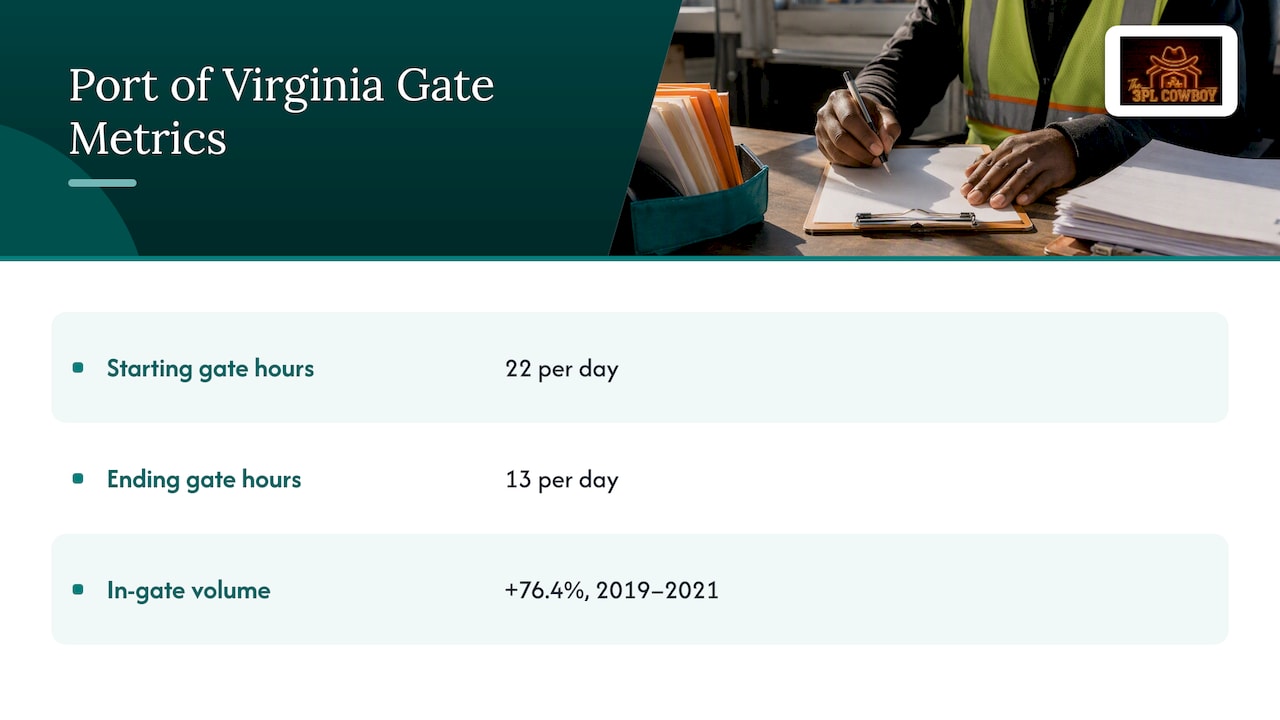
Well-run truck reservation programs have cut gate operational hours by over 40% while handling a significant increase in container volume at the Port of Virginia, where gate hours fell from 22 per day to 13 even as in-gate volume rose 76.4% between 2019 and 2021. That’s the scale of improvement a mature appointment and housekeeping program can produce once it’s fully adopted.
Pull these numbers from your gate system, WMS, and yard management platform daily during a pilot, weekly once stable. Compare week over week, not day over day: yard flow has enough natural variance that a single bad Tuesday tells you nothing.
How to Pilot and Scale a Yard Management Strategy
A pilot that’s scoped too broadly fails before it proves anything. Keep it narrow enough to control.
- Pick one yard or one gate lane and set a two week baseline before changing anything, capturing turn time, dwell time, and gate hours as they stand today.
- Assign a clear RACI: a yard operations lead owns daily execution, a transportation planner owns carrier communication, and an operations director owns the go or no-go call.
- Run the pilot for four to six weeks, introducing appointment slots first, then housekeeping rules once the appointment cadence is stable.
- Review against your baseline at the midpoint and at close, with explicit thresholds: if gate wait time hasn’t dropped at least modestly and dwell time is flat, diagnose before scaling.
- Scale lane by lane or yard by yard, not all at once, carrying the same baseline-then-measure discipline to each new rollout.
The most common blocker is carrier adoption: some drivers will ignore appointment windows out of habit. Mitigate it by communicating the policy change directly to top carrier partners before launch, not after complaints start. The second most common blocker is data quality, specifically trailer location records that drift from reality within days of going live. Build a manual spot-check into the first two weeks rather than trusting the system blindly.
Pro Tip: Treat the pilot’s first week as a calibration week, not a results week. Expect the numbers to look worse before they look better while staff adjust to new check-in habits.
If your pilot involves fixed labor shift changes, cross-reference our guide on warehouse labor planning before locking in new shift patterns against the appointment calendar.
Lessons From the Operating Floor
Validate location accuracy and check-in compliance weekly, not quarterly, or your numbers will quietly drift from reality.
Why Yard Control Belongs on the Operations Agenda Now
Yard control is cost avoidance and carrier goodwill, not a software line item. Treat it as change management: new habits for drivers, checkers, and planners, not a system swap.
— Michael
Where Retained Support Fits Into a Yard Pilot
Running a yard pilot well takes a RACI chart, a clean baseline, and someone willing to call a no-go honestly when the numbers don’t move. That’s harder to do from inside a building that’s also trying to hit its daily ship count. We built our 3PL Operations Advisory and 3PL Selection & Diligence work around exactly that gap: operator-grade diligence on pilots, RFPs, and provider selection, from people who’ve run the operation, not just advised around it.

If you’re weighing whether to run this pilot in-house or lean on a retained advisor to design and validate it, our services overview is the place to start. Request a diagnostic and we’ll tell you straight whether your yard problem is a tooling gap or a process gap.
FAQ
How much does a yard management system cost?
Published yard management system pricing varies widely by vendor and scope, and no single figure applies across providers. If you’re weighing a build versus a retained diligence process to scope the right fit, that’s assessed case by case.
What are the 7 C’s of logistics?
Definitions of the term “C’s of logistics” vary by source, and no single authoritative framework ties the term to a fixed, universally cited list. Treat any specific version you encounter as one interpretation rather than an industry standard.
What does yard management mean?
Yard management means controlling truck and trailer flow from arrival at the gate through staging in the yard to the dock, using appointment scheduling, housekeeping rules, and tracking to keep that flow predictable. It’s the operational layer between the road and the warehouse floor.
What are the 5 main activities in a warehouse?
Warehouse activities commonly center on receiving, putaway, storage, order picking, and shipping, with yard management acting as the connective layer that feeds trucks into receiving and pulls completed loads out through shipping. Yard discipline directly affects how smoothly those five activities run.
Sources
For teams designing a pilot, the Port of Virginia TRS report documents real gate-hour and re-handle outcomes, while the simulation-based optimization study offers a modeling framework for testing gate-count and schedule sensitivity before committing live capacity.
- Advanced Transportation and Congestion Management Technologies Final Report (Port of Virginia TRS project)
- Advanced Transportation and Congestion Management Technologies Final Report (DOT-hosted excerpt)