Prioritize operational deliverables and total occupancy cost over the headline rent number. Put every business term in a letter of intent before you pay a deposit or start any alterations, and get a broker for comps and a lawyer for lease language involved early. That sequence, in that order, prevents the two most common and expensive mistakes tenants make in industrial lease negotiation.
TL;DR:
- Focus on modeling total occupancy costs, including base rent, pass-through charges, escalations, and improvements over the lease term, rather than just face rent.
- Negotiate lease terms such as fixed or capped escalations, renewal formulas, and limited personal guarantees, to minimize long-term costs and risks.
- Ensure operational specifications like clear height, dock details, power capacity, and HVAC scope are explicitly defined in the lease, backed by testing and remedies.
- Demand clear, itemized CAM and NNN charges, annual budgets, and audit rights, with caps on controllable expenses and separate rules for capital expenditures.
- Build a comprehensive obligation matrix and draft measurable, enforceable language in the LOI to strengthen negotiating leverage before legal commitments.
Table of Contents
- What You Can and Should Negotiate in an Industrial Lease
- Operational Specs That Belong in the Lease, Not Just the Tour
- Controlling NNN and CAM: Caps, Audits, and Contested Items
- The Negotiation Timeline: LOI, Diligence, Counsel, and Commencement
- Getting Out: Assignment, Sublease, Surrender, and Buyouts
- Operator-Grade Checklist for Your Next Lease Negotiation
- Landlord Counter-Plays and How Operators Should Respond
- How 3plcowboy Handles the Negotiation for You
- Sources
- FAQ
What You Can and Should Negotiate in an Industrial Lease
Face rent is the number landlords lead with, but it’s rarely the number that determines whether you overpaid. Model total occupancy cost instead: base rent, NNN charges, scheduled escalations, and tenant improvement amortization added together, year by year, for the full term. A lease with lower rent and uncapped operating expenses can cost more by year three than a higher rent quote with controlled pass-throughs.
Term length and renewal formulas deserve the same scrutiny as rent. A five-year term with a market-rate renewal option gives the landlord leverage at your most vulnerable moment, when moving would be disruptive. Push for fixed escalations you can model today, or a capped market reset instead of an open-ended one. Practical Law’s guidance on industrial and warehouse leasing identifies term structure, permitted use, and restoration obligations as the core issues tenants routinely under negotiate.
A few other terms worth fighting for:
- Limit personal guarantees to a burn-off schedule tied to performance milestones, not the full term.
- Require “reasonableness” language in consent and assignment clauses so a landlord can’t arbitrarily block a sublease.
- Define rent-commencement triggers explicitly, tied to landlord obligations being met, not just a calendar date.
- Get renewal option rent-setting mechanics in writing now, including how “fair market rent” gets determined and by whom.
Operational Specs That Belong in the Lease, Not Just the Tour
What you see on a site tour means nothing if it isn’t in the lease. Clear height, dock count and type, truck court depth, column spacing, and floor load capacity all directly affect throughput, and every one of them should be a defined lease deliverable, not an assumption.
Power capacity is the one operators underestimate most. Specify kilowatt capacity, the electrical service type, whether feeds are dedicated, and who pays for upgrades if your equipment needs more than what’s installed. GSA’s own leasing guidance treats warehouse space differently than office space precisely because volume, not just square footage, drives operating cost, which is why clear height needs a number attached to it in the lease, not a description on a flyer.
HVAC scope needs the same treatment: define what’s covered, who maintains it, and whether there’s an uptime requirement if your operation depends on climate control.
- Require a written condition survey before you sign, not after.
- Build acceptance tests into the lease with specific pass/fail criteria.
- Attach remedies (rent abatement, landlord cure period, termination right) if the space fails those tests.
Pro Tip: Photograph and date every square foot of the space before move-in, even areas you don’t plan to use immediately. It’s the cheapest insurance you’ll buy against a disputed restoration claim at lease end.
Controlling NNN and CAM: Caps, Audits, and Contested Items
Common area maintenance charges are where good-looking deals quietly go bad. Insist on an itemized list of recoverable expenses and the exact pro rata formula used to allocate them across the property, not a vague reference to “tenant’s share of operating expenses.”
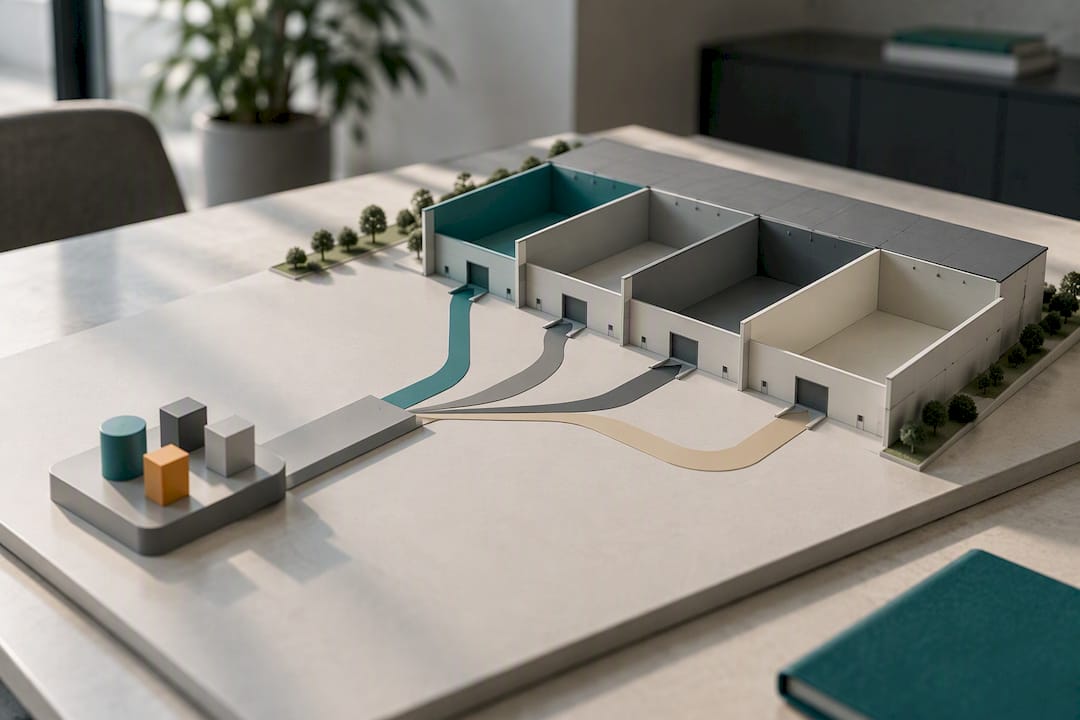
Demand annual budgets in advance and a reconciliation statement, not a lump invoice at year end. Practical Law’s industrial and warehouse leasing toolkit includes model clauses specifically built for negotiating audit rights and capping controllable expenses, which is exactly where tenants have the most leverage and use it the least.
Negotiate a cap, typically a fixed annual percentage, on controllable CAM items like landscaping and management fees. Carve out capital expenditures separately, with clear rules on amortization if the landlord tries to pass through a roof replacement or parking lot repaving.
- Require audit rights with access to underlying records, not just summary statements.
- Set a firm dispute-resolution timeline so a contested charge doesn’t linger for a year.
- Watch for ambiguous definitions of “structural repairs” versus “capital improvements.” That’s where landlords shift costs that should be theirs onto tenants.
The Negotiation Timeline: LOI, Diligence, Counsel, and Commencement
Work backward from your target occupancy date, because every step in industrial lease negotiation takes longer than either side estimates.
- Define your operating requirements first: power, clear height, dock configuration, permitted use. Everything else follows from this.
- Tour and test candidate buildings against those requirements, not against a generic impression of “good space.”
- Collect comparable proposals from at least two or three properties and model total occupancy cost for each using a comparateur de coûts bureaux Paris before you commit to one.
- Put measurable business terms into the letter of intent and get counsel involved before signing it, while you still have leverage to walk. The NYC commercial lease guide makes this point directly: never pay a deposit or start alterations before the lease itself is signed.
- Tie rent commencement to completed landlord work and a signed acceptance test, not just to key delivery.
A full cycle, from first LOI to lease execution, typically takes a couple of months or more for a straightforward industrial deal, potentially longer if landlord work or permitting is involved.
Pro Tip: Never let “substantial completion” trigger rent commencement. Tie it to a specific, testable condition, like a functioning fire suppression system or an issued certificate of occupancy, so you’re not paying rent on a building you can’t legally operate in.
Getting Out: Assignment, Sublease, Surrender, and Buyouts
Exiting a lease early comes down to four mechanisms, each with different residual liability. Assignment transfers your full obligation to a new tenant, usually with landlord consent required. Sublease keeps you on the hook as guarantor while someone else occupies the space. Surrender ends the lease outright, often with a negotiated payment. A buyout is a cash settlement to walk away clean.
Before proposing any of these, review recapture rights, restoration obligations, guaranty survival clauses, and how your security deposit applies. Landlords respond best to a credible mitigation package: a lined-up replacement tenant, a staged payment schedule, or documented reletting costs that show you’re not just asking for a favor. Harvard Business Review’s guidance on renegotiating rent notes that a concrete mitigation offer is often what actually moves a landlord, far more than the argument itself.
- Push for express release language covering future rent, CAM, and any personal guaranty, not just the base obligation.
Operator-Grade Checklist for Your Next Lease Negotiation
Most lease disputes trace back to something that was assumed rather than written down. Building a lease abstract and obligation matrix before you negotiate, tracking every cost, service, deadline, and end-of-term duty, surfaces those gaps while you can still fix them.
Obligation matrix items to capture:
- Power capacity in kW and who pays for upgrades
- Dock door quantity and type (dock-high vs. grade-level)
- Clear height, documented in the lease, not the marketing flyer
- Floor load capacity for racking and equipment
- Acceptance test criteria and who signs off
Sample LOI language to include:
- Base rent schedule with each year’s escalation spelled out
- TI allowance draw schedule tied to construction milestones
- Rent commencement condition tied to acceptance testing
- CAM cap percentage and audit rights language
Before signing, walk the site with dated condition photos, confirm the certificate of occupancy matches your intended use, and verify any contractor work has proper permits and approvals.
Michael Nooner has spent 17+ years running physical operations for brands including Nike, Walmart, and DHL, work that included taking one Nike inventory operation from 61% to over 98% cycle accuracy across 450,000+ SKUs. That kind of operational detail is exactly what separates a lease that works from one that quietly costs you for a decade.
Landlord Counter-Plays and How Operators Should Respond
Landlords often trade short-term concessions, free rent, a TI bump, for long-term protection: longer terms, weaker audit rights, broader restoration language. The counter isn’t to refuse the concession. Instead, demand measurable deliverables and staged acceptance in exchange, backed by a real cost model instead of a gut reaction. Bringing in Industrial Real Estate Strategy expertise or counsel early usually surfaces the hidden obligations before they’re locked into the lease, not after.
— Michael
How 3plcowboy Handles the Negotiation for You
Most tenants negotiate an industrial lease once every five to ten years. Landlords negotiate hundreds. That imbalance is exactly why an independent, operator-led advisory with no warehouse to fill and no brokered listing to move exists, offering direct experience translating warehouse specs into enforceable lease language.

Our Industrial Real Estate Strategy service builds the obligation matrix, models total occupancy cost against comparable proposals, and drafts the LOI language before your counsel ever sees it. If you’re running a competitive process across multiple markets, Warehouse RFP Management structures the bid comparison so landlords compete on real numbers instead of vague quotes. And if the deeper question is whether you need a leased facility at all versus a 3PL relationship, 3PL Selection & Diligence answers that first.
The outcome we aim for: lower total occupancy cost, deliverables documented in writing, and a facility that’s tested and acceptance verified before you sign an acceptance form and rent starts running. Visit the full services page to see how an engagement is scoped, or reach out directly to talk through your specific timeline.
Sources
- Key considerations in warehouse and industrial leasing (Practical Law)
- Leasing desk guide, Chapter 21: Warehouse Lease (GSA)
- Commercial lease guide (NYC Small Business Services)
FAQ
What Can You Negotiate in an Industrial Lease?
You can negotiate rent structure, term length, renewal formulas, tenant improvement allowances, CAM caps and audit rights, personal guaranty scope, and assignment or sublease consent standards. Operational specs like clear height, dock configuration, and power capacity are negotiable too, and belong in the lease itself rather than left as informal understandings, per Practical Law’s industrial leasing guidance.
How Long Does Industrial Lease Negotiation Take?
A full cycle from initial LOI to signed lease typically takes a couple of months or more for a straightforward industrial deal, potentially longer if landlord improvements or permitting are involved. Building requirements first and collecting comparable proposals before submitting an LOI, as recommended in NYC’s commercial lease guide, tends to shorten the process rather than lengthen it.
What Are the Best Tactics for Negotiating an Industrial Lease?
The strongest tactic is modeling total occupancy cost, not face rent, and putting every business term into the LOI before legal drafting starts. Engaging a broker for comps and counsel for language early, then requiring measurable acceptance tests tied to rent commencement, gives tenants leverage landlords rarely expect them to use.
How Do You Negotiate an Industrial Lease Buyout?
Start by reviewing recapture rights, restoration obligations, and how your security deposit applies under the existing lease. Build a mitigation package, a lined-up replacement tenant, staged payments, or documented reletting costs, since research on renegotiating rent shows a credible mitigation offer is usually what convinces a landlord to agree, and insist on release language covering future rent and guaranty obligations.
Does 3plcowboy Handle Lease Negotiation Directly?
3plcowboy’s Industrial Real Estate Strategy service supports tenants through diligence, obligation-matrix building, and LOI drafting for industrial lease negotiations. Pricing is available on request through the services page.