A reverse logistics strategy has one job: get every returned unit to the highest recoverable value before it depreciates, gets damaged in transit, or sits in limbo. That means building a grade-and-route rule at the earliest reliable touchpoint, whether that is a carrier scan, a store counter, or a 3PL receiving dock. Do that one thing well and everything else, cost control, sustainability targets, customer satisfaction, follows.
TL;DR:
- Implement grading and routing decisions at the earliest reliable touchpoint, such as a customer service call or carrier scan, to maximize value recovery.
- Use a simple, 3-5 band grading rubric and capture condition, reason code, and photos immediately at inspection to prevent value loss.
- Focus on a dedicated owner for reverse logistics processes who can enforce cycle times, resolve bottlenecks, and coordinate cross-departmental efforts.
- Choose collection models based on market density and failed pickup rates, analyzing recent data to select lockers, carrier pickup, or microhubs accordingly.
- Pilot reverse logistics strategies with a 30/60/90 plan, starting small, integrating automated disposition rules, and expanding only after proven KPI improvements.
Table of Contents
- What Reverse Logistics Strategy Actually Covers
- The Reverse Logistics Process Map From Return to Recovery
- Choosing a Collection Model: Lockers, Click-and-Collect, Carrier Pickup, or Microhubs
- Building a Grade-and-Route Playbook That Preserves Value
- Who Owns Returns, and How to Structure an Outsourcing Deal
- The KPIs That Actually Tell You If Reverse Logistics Is Working
- A 30/60/90 Plan to Pilot and Scale Reverse Logistics
- Why Ownership, Not Software, Fixes Returns
- How 3plcowboy Helps You Build a Reverse Logistics Strategy That Sticks
- Sources
- FAQ
What Reverse Logistics Strategy Actually Covers
Reverse logistics is the movement of goods from the customer back through the supply chain, the opposite direction of forward logistics, which moves inventory from manufacturer to buyer. Forward logistics deals with predictable volume and known destinations. Reverse flows are messier: unpredictable timing, unknown condition, and a dozen possible endpoints instead of one.
Returns land in your network for a handful of recurring reasons: sizing and fit issues in apparel, damage in transit, seasonal overbuy that retailers push back to vendors, recalls, and plain excess inventory. Each reason routes differently, and treating them all the same is where most reverse supply chain programs bleed money.
The business case is straightforward once you see the numbers on your own dock. A returned item that gets graded and routed within 48 hours often resells near full value. The same item sitting ungraded for three weeks loses margin daily, then usually gets liquidated at a steep discount or landfilled outright.
The stakes break into three buckets:
- Value recovery: correctly graded returns can go back to resale, refurbishment, or a secondary channel instead of the trash.
- Cost risk: transportation, storage, and labor for reverse flows often run higher per unit than forward fulfillment.
- Compliance and sustainability: regulated items, especially batteries, carry legal handling requirements that ignore your convenience.
The Reverse Logistics Process Map From Return to Recovery
A reverse logistics strategy lives or dies at the handoffs between stages. Here is the sequence that matters, and where the smart decision gets made versus where it usually gets made instead.
- Authorization. A customer or business initiates the return, either through a self-service portal or a call center. This is the first point where reason-code data should get captured, not guessed at later.
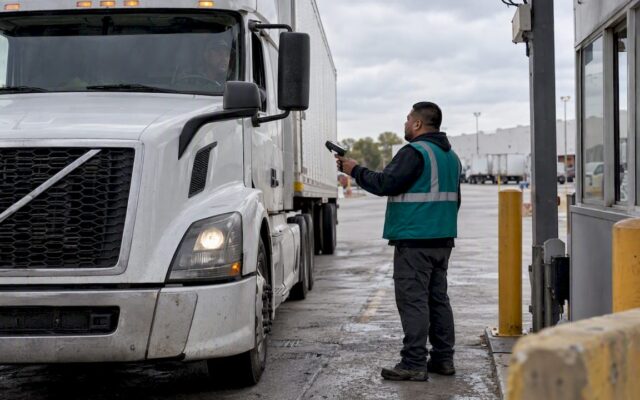
- Collection. The item physically leaves the customer, via carrier pickup, drop-off locker, retail counter, or 3PL pickup.
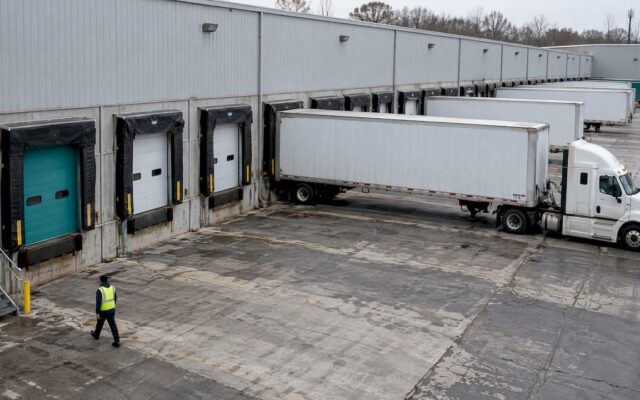
- Consolidation and transport. Units move from scattered collection points into a centralized or regional processing facility.
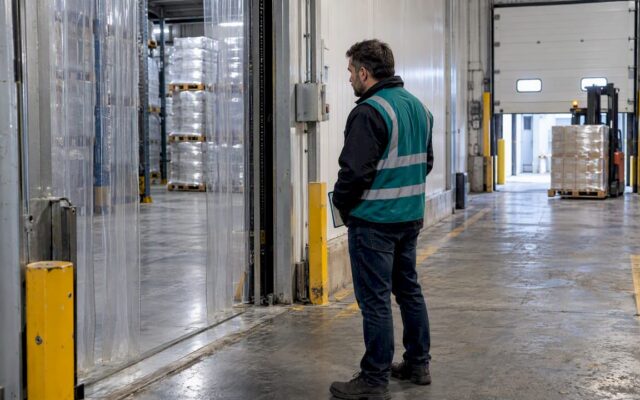
- Receipt and inspection. The item arrives at a facility and gets scanned in, with a first visual check against the stated return reason.
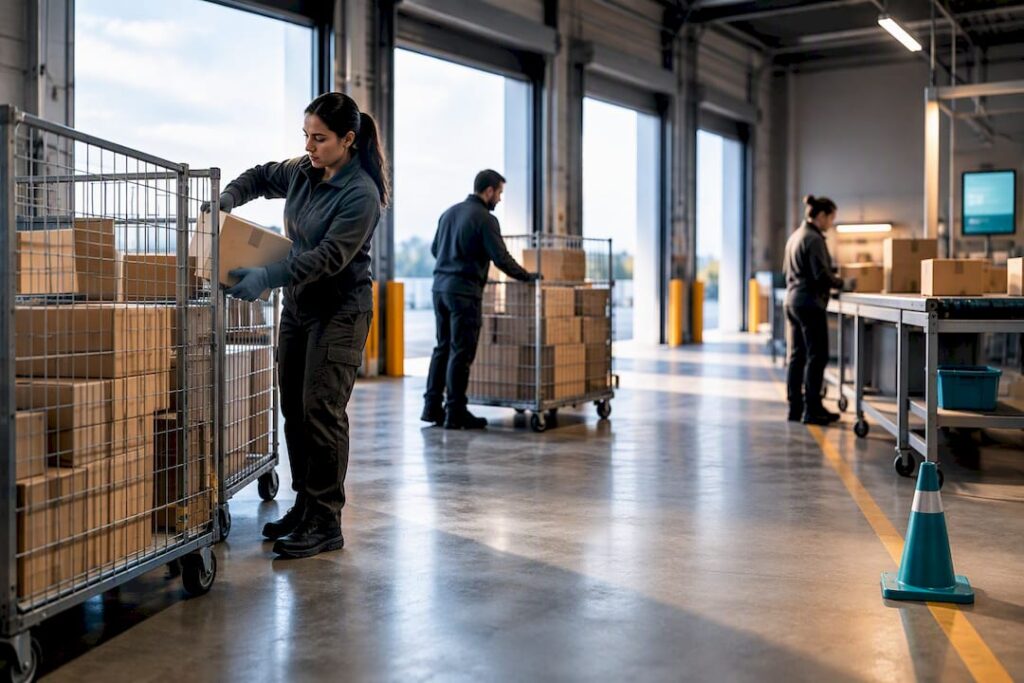
- Grading. Condition gets assessed against a defined rubric, sellable, refurbishable, damaged, or unsalvageable.
- Disposition. The grade drives a routing decision: resale, refurbish, recycle, or liquidate.
- Recovery or disposal. The physical action happens, whether that is restocking, remanufacturing, or certified disposal.
- Refund or replacement. The customer gets made whole, ideally without waiting on steps 3 through 7 to finish.
- Feedback loop. Reason-code data feeds back into product design, quality control, and forecasting.
The stages most companies get wrong are the early ones. Waiting until step 6 to decide what happens to an item throws away the recovery window. Practitioner guidance from the University of Tennessee’s Global Supply Chain Institute recommends pushing the first decision to whichever event is earliest and most reliable, a customer service call, a carrier drop-off scan, or a store receiving desk, rather than waiting for centralized inspection.
Three operating models dominate: returnless refunds for low-value items where processing costs exceed the item’s worth, centralized return centers (CRCs) that concentrate grading expertise in one or two facilities, and distributed grading at multiple nodes closer to the customer. Each trades speed against consistency, and the right choice depends on SKU value and volume density.
Choosing a Collection Model: Lockers, Click-and-Collect, Carrier Pickup, or Microhubs
Your collection model, the first-mile leg of the reverse supply chain, shapes everything downstream. Get it wrong and you inherit a failed-pickup problem that quietly inflates cost per return for months.
- Lockers. Low cost per drop-off, minimal customer effort once installed, but they require density to justify placement and don’t work for oversized or hazardous items.
- Click-and-collect at retail. Fast, familiar to customers, and it doubles as a consolidation point, but it depends entirely on store footprint and staff bandwidth.
- Carrier pickup. Convenient for the customer, but failed-pickup rates run high in low-density or rural areas, and every missed attempt adds a reattempt cost.
- 3PL pickup. Scales well for B2B and bulk consumer returns, with predictable routing, though it usually costs more per unit than a locker network.
- Microhubs. Small urban consolidation points that cut last-mile distance and emissions, effective in dense metro areas but a poor fit for sparse geography.
Research on e-commerce reverse logistics selection published in Business Process Management Journal evaluates these models against customer effort, failed-pickup rate, density, cost per pickup, speed to disposition, and emissions, and finds that sensitivity to failed pickups can flip which option looks best. A model that wins on paper at a 5% failed-pickup rate can lose badly at 20%, which is common in areas without reliable delivery-attempt data.
Urban markets with high return density usually favor microhubs or locker networks because volume justifies the fixed cost. Low-density and rural markets tend to favor carrier pickup paired with a returnless-refund threshold for low-value items, since the pickup cost alone can exceed the item’s worth.
Pro Tip: Before committing to a collection model, pull your last 90 days of failed-pickup data by ZIP code. Most teams have never looked at this number, and it usually points straight at which model actually fits their footprint.
Building a Grade-and-Route Playbook That Preserves Value
A grading rubric only works if it is simple enough for a warehouse associate to apply in under 30 seconds with a handheld scanner. Overengineered rubrics with a dozen condition tiers collapse under real volume.
- Define three to five condition bands. New/resellable, like-new/minor cosmetic, functional/refurbishable, damaged/parts-only, and unsalvageable covers most product categories without overcomplicating the call.
- Capture inputs at the scan, not after. WMS or handheld prompts should force entry of condition, reason code, and photo evidence at the moment of inspection, before the item moves to a bin.
- Set economic thresholds per band. Resale makes sense above a defined margin floor; refurbish when labor cost stays under a percentage of resale value; recycle or liquidate when neither pencils out.
- Route immediately based on the band. No holding pen for “decide later.” Every band maps to a physical lane or bin on the floor.
- Flag special cases before general grading. Recalled items, hazardous materials, and batteries get pulled into a segregated queue before they ever touch standard disposition.
Battery-containing returns need particular care. The EPA’s guidance on lithium-ion battery recycling lays out the safety chain: identification, segregation, proper packaging, qualified transport, and downstream processing through certified pathways like pyrometallurgy or hydrometallurgy. A damaged battery mixed into a general returns stream is a fire risk, not just a compliance headache, and it needs the same handling caution regardless of whether the item came from a consumer electronics return or a solar-equipment return.
Recalled items follow a similar segregation logic: pull them from standard grading entirely and route them into a dedicated compliance lane with documented chain of custody.
Who Owns Returns, and How to Structure an Outsourcing Deal
Reverse logistics fails most often not from bad execution but from nobody owning it. Returns tend to get split across customer service, warehouse ops, and finance, each optimizing for their own metric, and none of them accountable for total recovery value.
UPS’s white paper on reverse logistics argues for dedicated executive oversight of reverse activities, structured as a cross-functional owner who answers for cycle time, recovery rate, and cost together, not in isolation. Without that single point of accountability, grading gets deprioritized whenever any one department is busy.
Deciding what to keep in-house versus outsource comes down to four questions:
- Capability: does your team have grading expertise for your product categories, or would a specialized partner grade faster and more accurately?
- Scale: is return volume high enough to justify dedicated headcount and space, or does it fluctuate seasonally in a way a partner absorbs better?
- Control: how much visibility do you need into disposition decisions for brand or regulatory reasons?
- Financial model: does a revenue-share or fixed-fee partner structure align incentives better than a straight labor-cost model?
If you outsource, the contract needs to specify more than “process returns.” It should define grading accuracy standards, SLAs for scan-to-completion time, disposition clocks that cap how long an item sits before a decision is forced, recovery-share economics if the partner takes a cut of resale value, and audit rights so you can verify grading calls after the fact. A 3PL selection and diligence engagement exists specifically to pressure-test these terms before you sign, because most reverse-logistics contracts get written by the vendor’s sales team, not by anyone who has run a returns floor. For a primer on how third-party logistics providers structure capability and scale, BeanHawk’s glossary on 3PL is a useful starting reference.
The KPIs That Actually Tell You If Reverse Logistics Is Working
Five metrics cover most of what matters: cycle time to disposition, margin recovery rate, cost per return, landfill diversion rate, and customer returns satisfaction. Track fewer than that and you miss tradeoffs; track more and you drown the team in dashboards nobody checks.
Supply Chain Dive’s returns-as-revenue-engine playbook makes the case for measuring margin recovery rate and cycle time together, rather than optimizing cost per return in isolation, because a program can hit low cost-per-return targets by processing slowly and still bleed resale value every day an item sits ungraded.
The tradeoff shows up constantly: faster transport to a grading facility costs more per shipment but often lifts recovery value enough to more than offset the added freight spend, since resale value decays with time. A dashboard should surface both numbers side by side, never cost per return alone. Set targets as ranges tied to product category, since electronics depreciate faster than apparel and need tighter cycle-time thresholds.
A 30/60/90 Plan to Pilot and Scale Reverse Logistics
The fastest way to prove a reverse logistics strategy works is a bounded pilot, not a company-wide rollout. Supply Chain Dive’s playbook and operator experience both point to the same structure.
- Days 1 to 30: Select a cohort of 20 to 50 SKUs, define a grading rubric for that cohort, implement grade-and-route at the earliest touch, and start capturing reason-code data on every unit. Keep the scope narrow enough that you can staff it without pulling people off other work.
- Days 31 to 60: Integrate the routing rules into your WMS or returns management system so grading decisions trigger automatic disposition, not manual review. Align carrier or 3PL collection schedules with your grading capacity, and negotiate initial SLAs for scan-to-completion time.
- Days 61 to 90: Stand up the full KPI dashboard, cycle time, margin recovery, cost per return, landfill diversion, run an audit of grading accuracy against a sample, and begin scaling successful disposition streams to additional SKU categories. This is also when hazardous and battery-handling processes should move from ad hoc to documented procedure.
Pro Tip: Run two collection models concurrently during the 30-day pilot, in the same market, rather than picking one blind. A side-by-side test with a defined success threshold, margin recovery uplift or cycle-time reduction, tells you more in four weeks than a year of theoretical modeling.
Operational wins from disciplined execution show up in unglamorous places. A pallet-program redesign focused on right-sizing and reducing damage-driven returns delivered $6 million in annual savings for one retail grocery operation. A detailed 30/60/90 operator plan walks through the sequencing in more depth for ops leaders building their own pilot.
Why Ownership, Not Software, Fixes Returns
Most companies treat reverse logistics as a technology problem. It is an ownership problem first. The best routing software in the world does nothing if three departments each think returns are someone else’s job, and that gap is where recoverable value quietly disappears.
I have watched teams spend six figures on a returns management platform while the actual grading decision still sat in a manual queue for two weeks, because nobody had been assigned to own the disposition clock. The fix wasn’t more software. It was one person accountable for cycle time and recovery rate together, with the authority to force a decision at the dock instead of letting inventory drift into limbo.
Run a narrow pilot before you scale anything. Assign one executive owner. Measure margin recovery, not just cost.
— Michael
How 3plcowboy Helps You Build a Reverse Logistics Strategy That Sticks
We run these engagements the same way we’d run our own operation: independent, operator-led advice based on returns data analysis. If you’re weighing whether to build grading capability in-house or hand it to a partner, that independence allows for advice based on deep operational experience rather than sales incentives.

An advisory engagement typically covers pilot design for your specific SKU mix, selection and diligence if you’re evaluating outside partners for collection or grading, KPI benchmarking against your category, and SLA language to help protect you when a partner underperforms on disposition clocks. Bring in outside help when your team lacks grading expertise in-house, when you need results in a fixed window rather than a slow internal build, or when hazardous flows like batteries or recalled items raise the compliance stakes beyond what your current process was designed for. Start by reviewing the full services list and requesting a conversation about your returns volume and current pain points.
Sources
Claims in this article draw on the University of Tennessee’s 5Ps framework, Supply Chain Dive’s margin recovery playbook, Business Process Management Journal’s collection strategy research, collection-policy modeling published via ASME, and EPA guidance on lithium-ion battery recycling.
- A decision support framework to improve the business performance of e-commerce retailers and logistics providers through reverse logistics strategies selection | BPM Journal
- Lithium-Ion Battery Recycling | U.S. EPA
FAQ
What Are the 5 R’s of Reverse Logistics?
The 5 R’s commonly cited are returns, recalls, repairs, repackaging, and recycling, the core activity categories a reverse logistics strategy has to handle. Different sources group these activities slightly differently, but the common thread is that each requires its own grading and disposition path rather than one generic returns process.
What Is an Example of Reverse Logistics in Practice?
A retailer receiving a damaged apparel return, grading it as refurbishable, and routing it to a secondary resale channel instead of a landfill is a textbook example of reverse logistics. The same applies to a manufacturer collecting recalled electronics and routing damaged batteries through certified recycling pathways rather than standard disposal.
What Are the 7 R’s of Reverse Logistics?
Definitions vary across sources, but a common extended version adds returns management and reporting to the core 5 R’s, creating a fuller loop that includes tracking reason-code data and feeding it back into forecasting and product design. Not every practitioner uses the same seven terms, so treat this as a general framework rather than a fixed standard.
What Is Amazon’s Reverse Logistics Strategy?
Amazon relies heavily on returnless refunds for low-value items, centralized return centers for higher-value grading, and a dense network of drop-off points including lockers and retail partnerships for collection. The general strategy mirrors the grade-and-route principle covered in this article: route items to the highest-value disposition as early as possible rather than defaulting every return to a central warehouse.
How Do I Improve Reverse Logistics Without a Full Overhaul?
Start with a bounded pilot on 20 to 50 SKUs rather than rebuilding your entire returns process at once. Implement a simple grading rubric at the earliest scan point, measure cycle time and margin recovery rate for that cohort, and expand only once the pilot proves out, an approach 3plcowboy’s operator-first process guide walks through in detail.