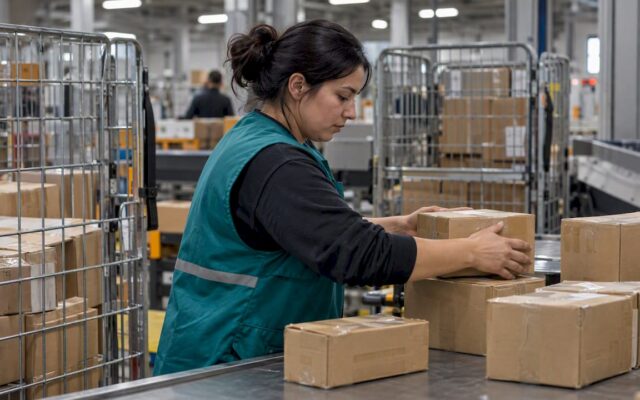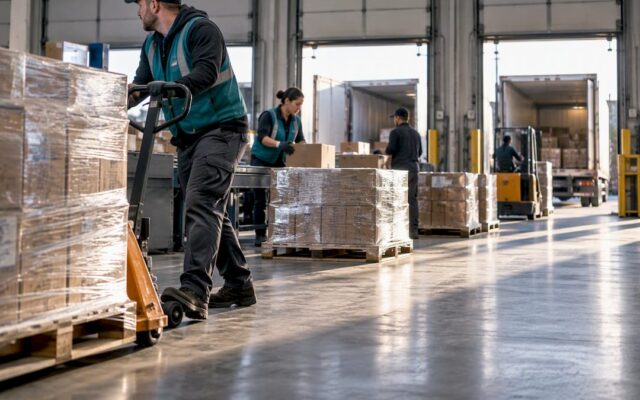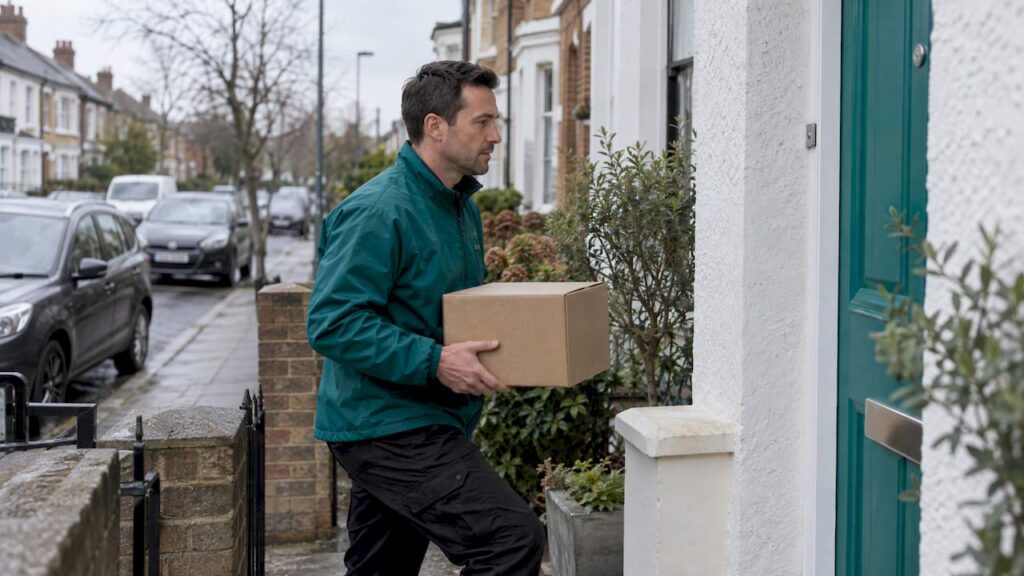
A last mile delivery strategy is a set of decisions about where inventory sits, who carries it the final stretch, and how you measure the result. Routing software helps, but it comes last. The biggest cost levers are upstream: how close your stock is to your customers, which carriers and service levels you assign to which ZIP codes, and whether your 3PL network matches where orders actually ship.
This guide is written for brand operators and executives who own the shipping bill and have to decide what to change first.
TL;DR
- Fix the network before the route. Inventory placement sets the floor on last mile cost and transit time. Software only trims what is left above that floor.
- Micro-fulfillment is a tool for dense, high-volume demand pockets, not a default. Test it against your own order density before signing a lease.
- Failed first attempts are a cheap problem to fix: validate addresses at checkout, store access notes, and send proactive delivery notifications.
- Track performance by ZIP code and service level, not by zone average, so you can shift volume when a region slips.
- Pilot one change at a time, with a 60 to 90 day measurement window and a baseline cost per delivered order.
Table of Contents
- What the last mile really costs
- Start with the network, not the route
- When micro-fulfillment centers make sense
- Optimizing the last mile you do control
- Technology: where it pays and where it does not
- A 90-day plan to improve your last mile
- Choosing a 3PL for last mile performance
- Our perspective
- Work through this with us
- FAQ
- Sources
What the last mile really costs
The last mile is the shortest leg and often the most expensive. The clearest public evidence comes from the U.S. Postal Service, a carrier with a fully visible cost structure. A GAO review found that last mile delivery took up nearly one-third of USPS operating costs in 2018, at least $21.1 billion. Street delivery activity grew 19.4 percent from fiscal 2008 to fiscal 2018. Carrier compensation for street delivery made up roughly 86% of last mile costs, about $18.2 billion.
Three lessons carry over to your own shipping spend:
- Labor dominates. The cost is mostly people and vehicles moving through neighborhoods, which is why density matters more than almost anything else.
- Fixed networks are costly to run at low volume. A delivery route costs nearly the same whether it drops 60 packages or 120.
- The quote is not the invoice. Residential, fuel, delivery-area and dimensional weight charges change what you pay per parcel. Benchmark the landed cost per delivered order, not the base rate.
That third point is where most brands lose money without noticing. If you have never rebuilt your cost per order from carrier invoices, start there. Our fulfillment cost analysis page explains how we approach it.
Start with the network, not the route
Most content on this topic opens with route optimization. For a brand shipping parcels through national carriers, that is the wrong first move, because you do not control the carrier’s routes. You control three things:
- Where your inventory is stored.
- Which carrier and service level handles each destination.
- What the customer is promised at checkout.
Distance is the first lever. Moving a fulfillment node closer to customers shortens transit and often lowers cost, because carriers price parcels partly by zone. The exact savings depend on your lanes, carrier contracts and order mix, so treat any rule of thumb you read as a hypothesis to test, not a forecast.
Reading your order map
Before you change anything, pull 12 months of orders and answer four questions:
- What share of orders ship to the top 10 metro areas?
- What is your average zone and transit time per destination region?
- Which ZIP codes generate the most delivery exceptions, delays or claims?
- How much of your volume is promised as two-day or faster?
If 60% of orders land in a handful of metros but ship from one warehouse 1,500 miles away, you have a placement problem. If orders are spread thin across the country, a second node in a central market may help more than anything in a dense city.
This is the core of distribution network design. A good model produces a site shortlist, not a slide deck. See how we frame that in network design modeling.
Where to put a last mile hub
Hub location comes down to a short list of criteria:
| Criterion | What to check |
|---|---|
| Demand density | Share of your orders within a 1 to 2 day truck or parcel radius of the site |
| Carrier access | Pickup times, sort-facility proximity, and whether carriers will induct at your dock |
| Labor | Wage levels, availability and turnover in the submarket |
| Rent and zoning | Lease rates, permitted use, and truck and trailer parking |
| Road and port access | Highway ramps, congestion at peak hours, and inbound freight lanes |
Zoning and truck parking are where a site that looks right on paper fails in practice. If you are screening sites that need trailer or truck parking, this overview of truck parking zoning and spaces per acre is a useful quick filter. For a broader view of how U.S. industrial zoning labels can mislead buyers, read our industrial zoning guide. Lease terms matter as much as the site, so make warehouse specs enforceable before you sign.
When micro-fulfillment centers make sense
Micro-fulfillment is the most searched topic around this subject, and it is also the most misunderstood. A micro-fulfillment center (MFC) is a small, often automated facility placed near dense demand. UPS describes them as typically ranging from 500 to over 5,000 square feet, and cites a projection of 24.84% growth in MFC deployment over the six years after June 2026. Growth projections tell you the idea is spreading. They do not tell you it fits your business.
Signs an MFC is worth testing
- High order density in a small geography. Enough daily orders within a few miles to keep a small site busy.
- Fast promises you cannot meet today. Same-day or next-day demand that your current network misses.
- A compact, fast-moving assortment. MFCs work best with limited SKU counts. Wide, slow catalogs are expensive to hold in small spaces.
- High delivery value. Grocery, pet, health and wellness, beauty and similar categories where fast delivery changes conversion or retention.
Signs it is not
- Orders are spread across many regions with no dense cluster.
- Your SKU count is large and most items sell slowly.
- Average order value is too low to carry a local delivery cost.
- You have no volume data to prove the cluster exists.
In many of those cases, a conventional 3PL warehouse in a well-chosen market, combined with better carrier allocation, beats a micro site. Some brands also use small urban nodes for kitted or promotional inventory that must reach many local addresses quickly. A swag box fulfillment service is one example of how branded kits can ship to single or multiple locations without a dedicated node of your own.
We lay out the economics and the test design on our micro-fulfillment centers page. The key discipline is a pilot with a defined radius, a fixed set of SKUs and a pre-agreed cost per order target. Compare it against your current landed cost, not against a vendor’s average.
Optimizing the last mile you do control
Once the network is right, optimization gets real. Whether you run your own fleet, use regional carriers or hand parcels to national networks, the same operational principles apply.
Cut failed first attempts
Every failed delivery pays for the trip twice and creates a customer service contact. SmartRoutes reports that the fastest gains in first-attempt success come from validating address data at order entry and sending automated dispatch and ETA notifications with live tracking. Add stop-level notes, such as entry codes and parking instructions, directly into the routing app instead of relying on driver memory. Practitioners cited in a route optimization case study describe the same step as critical to reducing failed attempts.
A practical checklist at checkout:
- Validate and standardize the address before the order is released.
- Capture a phone number and a delivery window preference.
- Ask for apartment, gate or building codes when the address type calls for it.
- Send an ETA message on the day of delivery, with a way to reschedule.
Use route optimization, with limits
If you run your own or a contracted fleet, software matters. The same SmartRoutes source states that moving from manual planning to route optimization software typically produces 15 to 20% fewer miles driven and 20 to 25% more deliveries per vehicle. This is a vendor-published range, so treat it as an upper-middle expectation for fleets that are planning by hand today, not a guarantee.
The better practice goes beyond static daily plans. The same case study notes that high-performing operations monitor traffic and progress, letting dispatchers adjust or swap stop sequences mid-day. It also says that feeding in real-world data such as traffic, weather and urban access constraints can improve reliability even when planned distance grows slightly. A shorter route on paper is not always the more reliable one.
For readers who want the research side, academic reviews cover machine learning in last-mile routing and vehicle routing in urban areas. Most brands will not need that depth. They need good data, clear service rules and a carrier mix that fits.
Manage performance by ZIP code
National averages hide local problems. FirstMile’s write-up on on-time delivery makes the point that dynamic shifting between carriers or service levels requires ZIP-level performance data, not zone averages. If a region shows congestion or recurring delays, you reroute volume instead of hoping it improves.
In practice, build a simple monthly scorecard by destination ZIP prefix:
- On-time delivery rate against the promised date.
- First-attempt success rate.
- Exception and claim rate.
- Cost per delivered order, including surcharges.
Use it to assign carriers by region in your routing guide. Our notes on routing guide design and transportation strategy cover how to make those rules hold up under peak volume.
Consider off-peak delivery in dense cities
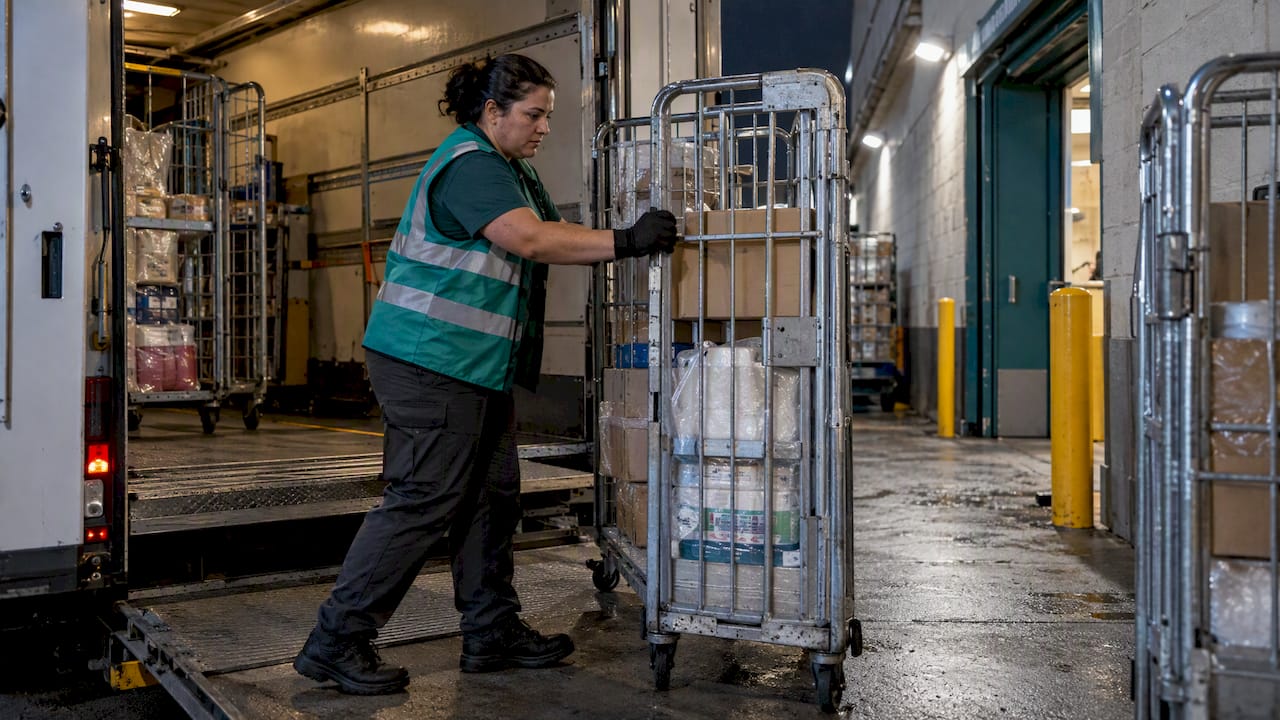
If you run your own urban deliveries or supply stores, the timing of deliveries matters. A U.S. DOT-hosted document on an off-peak delivery demonstration reports that testing in New York City shifted 20% of deliveries to off-peak hours, reducing daytime congestion, idling and labor hours per delivery. It requires receivers who can accept night deliveries, so it fits commercial and store replenishment better than home delivery.
Technology: where it pays and where it does not
Technology is the loudest part of this topic and the easiest place to overspend. A transportation management system, for example, now sits at the center of many last mile setups, and sources such as FarEye’s overview of TMS in last mile describe how AI and automation are changing its role. Those capabilities are real, but a TMS will not fix a network that places inventory in the wrong market.
A sensible order of investment:
- Clean address and order data.
- Carrier rate and performance visibility by ZIP.
- Customer notifications and tracking.
- Route optimization, if you operate your own fleet.
- Automation in a small node, only after volume is proven.
A 90-day plan to improve your last mile
Here is a sequence we would suggest for a brand shipping from one or two nodes.
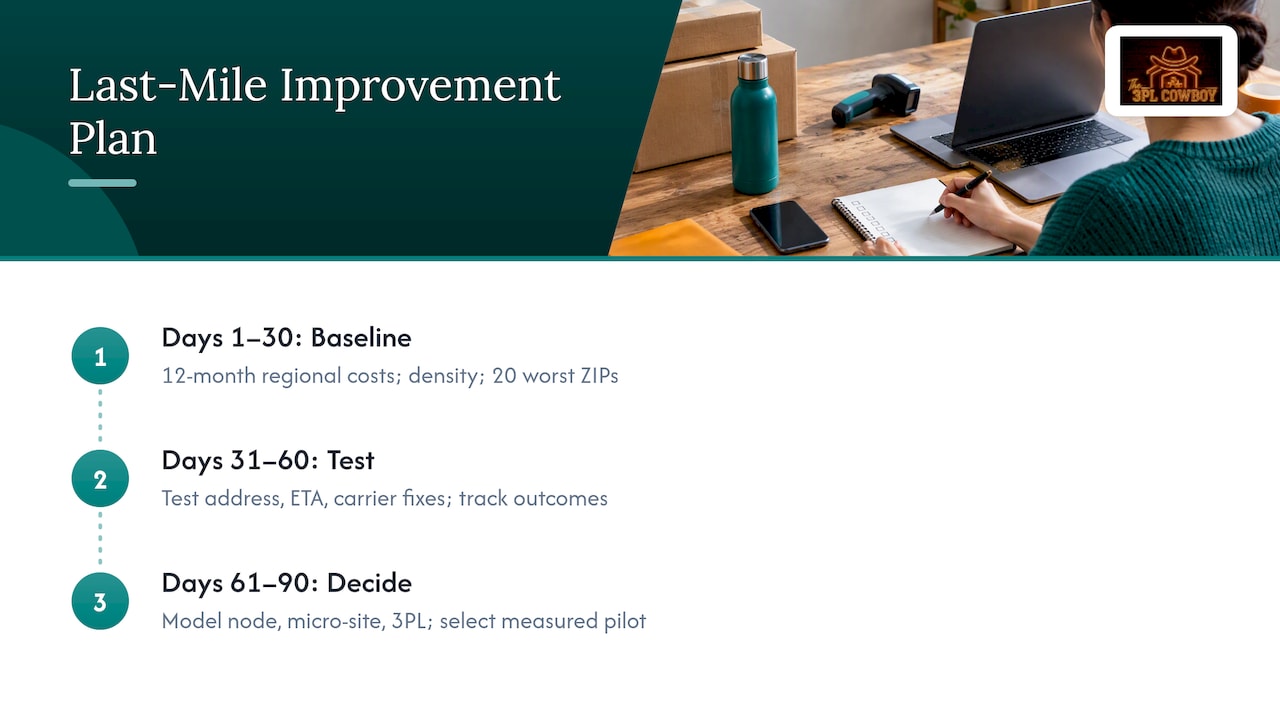
Days 1 to 30: baseline. Pull 12 months of orders and carrier invoices. Calculate landed cost per delivered order by region. Map order density. Identify the worst 20 ZIP prefixes by delay and exception rate.
Days 31 to 60: test the cheap fixes. Add address validation, ETA notifications and access notes. Reallocate volume in the worst regions to an alternate carrier or service. Record the effect on first-attempt success and cost.
Days 61 to 90: decide on structural change. Run a network model comparing your current footprint to a second node, a micro site in one dense metro, or a different 3PL location. Choose one pilot with clear success metrics. If the model does not beat the baseline by a margin that covers the move, do not move.
If freight into your nodes is part of the problem, our freight consolidation pilot plan and mode shift strategy address the inbound side. For the broader cost picture, see our logistics cost reduction playbook.
Choosing a 3PL for last mile performance
Your 3PL’s location and carrier relationships drive much of your last mile result. When you evaluate or switch, ask for evidence, not promises:
- Which carriers do they induct with daily, and what are the pickup cutoffs?
- What are on-time and first-attempt rates for your top destination ZIP codes?
- How do they handle peak and overflow capacity?
- Can they support a second node or a local delivery option as you grow?
- What is the full fee schedule, including surcharges that show up after go-live?
A bad fit here shows up as late deliveries and rising costs, and switching is painful. Our 3PL selection criteria are built around failure modes, so you test the risks before signing. Your order fulfillment strategy should also define what is insourced and what is outsourced.
Our perspective
We see the same pattern in nearly every last mile conversation. A brand arrives asking about route software or a micro-fulfillment site, when the real issue is that inventory sits in the wrong place, or the carrier mix was set on a sales call and never revisited.
Because we advise both brands and 3PL operators, we see both sides of the pricing table. A last mile promise looks very different from the warehouse floor than from the sales deck. Our background comes from running operations, including 17+ years across organizations such as Nike, Walmart, DHL, FedEx, Kellogg’s and Peloton. That shapes our view: measure first, change one variable at a time, and let the pilot data decide.
Our advice on micro-fulfillment is plain. It is a useful tool for the right density and the wrong tool for most brands. The test is whether a small node beats your current landed cost per order in a defined radius, with a fair allowance for the added inventory and labor. If it does, scale. If it does not, put the money into network placement and carrier allocation.
— Michael Nooner
Work through this with us
The 3PL Cowboy is a supply chain advisory run by Michael Nooner in Dallas, TX. For brands, we handle 3PL selection and diligence, fulfillment cost benchmarking and distribution network design. If you want an independent view of where your last mile cost comes from and which fix to try first, see our services or the page for brands.
FAQ
What is the role of last mile delivery in the supply chain?
It is the final step that moves an order from a nearby warehouse, store or hub to the customer. It is also the most visible step, since it shapes the customer’s experience and often carries a large share of shipping cost. For brands, it is where network design decisions show up on the invoice.
How do I optimize last mile delivery without running my own fleet?
Focus on what you control: inventory placement, carrier and service level by ZIP code, address quality and delivery notifications. Track on-time and first-attempt rates by region, then shift volume where performance slips. A different 3PL location can matter more than any tool.
Are micro-fulfillment centers worth it for a small brand?
Only if you have dense, repeat demand in a small area and a compact, fast-moving product range. Otherwise, a well-placed 3PL warehouse and better carrier allocation usually cost less. Run a limited pilot against your current landed cost per order before committing to a lease.
Where should a last mile hub be located?
Place it where your order density is highest, then check carrier access, labor, rent, zoning, truck parking and highway access. Model several candidate sites against your actual order data. A site that looks cheap can lose its savings to poor carrier pickup options or labor shortages.
Sources
- GAO-20-190, U.S. Postal Service nonpostal services report
- UPS: How micro-fulfillment centers are transforming retail distribution strategy
- SmartRoutes: How to fix out for delivery failures
- AI/ML route and last-mile optimization case study
- FirstMile: how to get 99% on-time delivery
- U.S. DOT document: off-peak delivery demonstration
- FarEye: how TMS is reshaping last mile delivery
- Machine learning for data-driven last-mile delivery optimization
- Review of literature on vehicle routing problems of last-mile delivery in urban areas